Healthy Vegetables for Dogs: A Real-Life Guide for Dog Owners Who Share Snacks
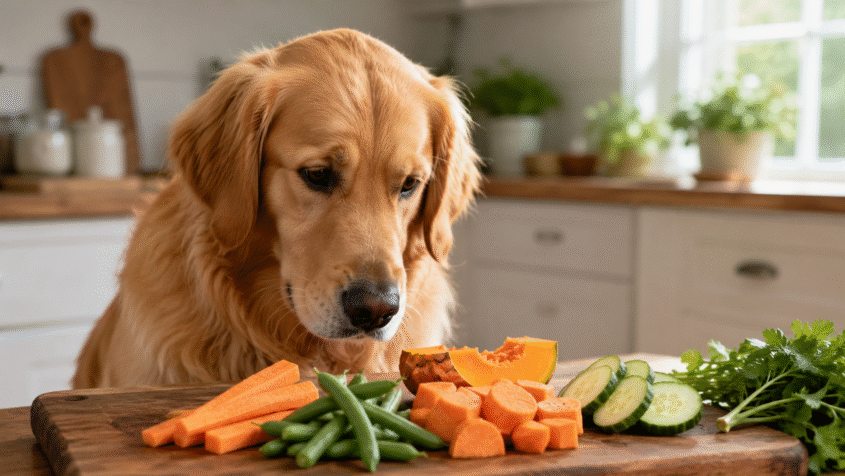
There are two kinds of dogs in the kitchen. The first one hears the fridge open and arrives before you even touch the handle. The second one pretends not to care, but somehow ends up under your feet the moment you start cutting anything that makes a sound.
Carrots. Cucumber. A green bean that falls on the floor. A bit of cooked pumpkin left from dinner.
And there you are, holding a piece of vegetable and thinking, “Can I give this to the dog, or am I about to make a very expensive mistake?”
That question is more common than people admit. We all know dogs cannot eat everything we eat, but the vegetable drawer feels harmless. It looks healthy. It looks boring. It looks like the kind of thing nobody could possibly get into trouble with.
Except dogs are dogs, and their stomachs do not always agree with our logic.
So let’s talk about healthy vegetables for dogs without making it sound like your Labrador needs a wellness bowl with seasonal toppings. They don’t. Most dogs are perfectly fine with their normal food, assuming it is balanced and suits them. Vegetables are extras. Useful extras sometimes, but still extras.

The goal is simple: know what you can share, how to serve it, and when to leave your dog out of your dinner plans.
The safe stuff I’d actually keep in the fridge
Carrots are usually the easiest place to start. Not because they are magical, but because they are practical. They last for ages, they are cheap, and lots of dogs like that hard crunch. A raw carrot stick can keep a chewer busy for a few minutes, which is already a small miracle in some homes.
For smaller dogs, slice it. For dogs who gulp food like they have never been fed in their lives, slice it even more. Big chunks and fast eaters are not a great combination.
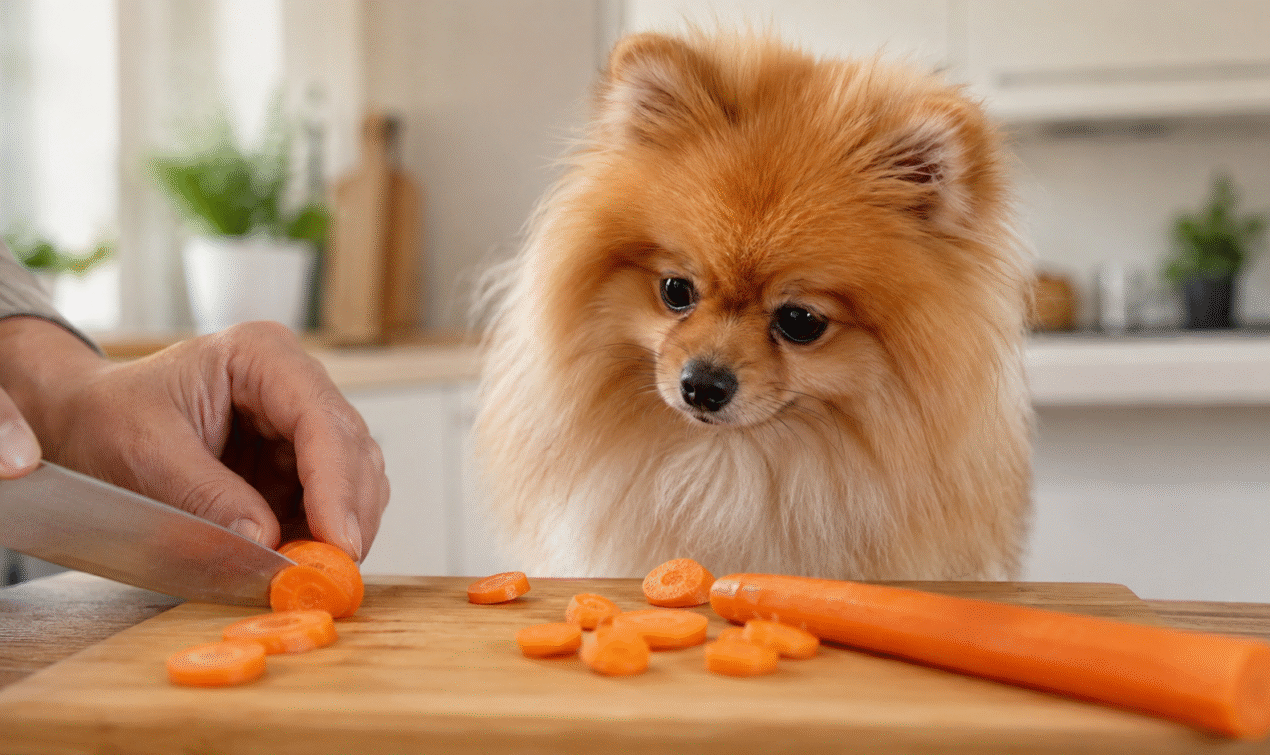
Cooked carrot is softer and easier for older dogs, especially if teeth are not what they used to be. Just don’t dress it up. No butter, no salt, no garlic, no pan juices. The dog does not need the restaurant version.
Cucumber is another good one, although I’ll be honest, some dogs think cucumber is a scam. They take it, bite once, and leave it on the floor. Others love it, especially when it is cold from the fridge.
It is mostly water, which is why it works well on warm days or when you want a snack that is not heavy. Wash it, cut it into little pieces, and offer a couple of slices. That’s it. No pickle situation, please. Pickles are not “cucumber for dogs”; they are salty, vinegary, and often full of things dogs do not need.
Green beans are the vegetable I think people forget about. They are not cute. They are not trendy. Nobody is building an Instagram bowl around green beans. But for a dog who is always hungry, they can be genuinely useful.
A few plain green beans can add crunch and fiber without adding much else. That makes them handy if you are trying to cut down on richer treats. Raw, steamed, or boiled is fine for many dogs, as long as they are plain. If they come from a can, check the salt. Better still, rinse them.
This is the kind of ordinary, boring food that makes healthy vegetables for dogs useful in real life. Not glamorous. Just easy.
Sweet potato is a different story because dogs tend to really like it. It is sweet, soft when cooked, and smells more interesting than cucumber. But it is also easier to overdo.
Never give it raw. Cook it until it is properly soft, let it cool, then offer a small amount. Small means small. A few cubes, not half a bowl. Sweet potato is heavier than cucumber or green beans, and if your dog has a sensitive stomach, too much can turn into a problem very quickly.
Also, keep the holiday version away from them. No sugar, no butter, no cinnamon, no oil. Just plain cooked sweet potato. Your dog will not feel deprived because you skipped the seasoning.
Pumpkin is one of those things dog owners talk about like it belongs in a first-aid kit. And yes, plain pumpkin can be helpful for some dogs, especially when digestion is a little off. It has fiber, it is soft, and many dogs accept it mixed into their food.
But again: plain. Not pumpkin pie filling. Not spiced pumpkin. Not the sweet stuff from a dessert recipe. Just cooked pumpkin or canned pumpkin puree with nothing added.
Start with a spoonful, not a mountain. People sometimes panic when a dog has loose stool and immediately throw half a can of pumpkin into the bowl. Please don’t. More is not always better. Sometimes more is just more mess.
And if your dog is vomiting, has blood in the stool, seems weak, has pain, or the problem keeps coming back, pumpkin is not the solution. That is a vet call.
Celery is safe for many dogs, but it is not every dog’s dream snack. Some love the crunch. Some chew it once and look betrayed.
If you try it, cut it small. Celery strings can be annoying, and a whole stalk is not a smart idea for a dog who does not chew carefully. Wash it well because dirt hides in all those little grooves.
I would treat celery as a “nice if they like it” food, not something worth forcing. Dogs do not need to eat celery. Honestly, half the humans I know barely want to eat it either.
Broccoli can be okay too, but I would keep portions tiny. A little piece now and then is very different from giving a dog a bowl of broccoli and hoping for the best. It can cause gas and stomach upset, and dog gas is not a private matter. The whole house gets involved.
Raw or lightly cooked broccoli can work, depending on your dog, but it must be plain. No garlic. No onion. No cheese sauce. No butter. The minute it becomes part of your seasoned dinner, it stops being a simple dog snack.
That is the thing with healthy vegetables for dogs: the vegetable is often fine, but the human version of it is not.
What I would not share
There are a few foods I would not play around with.
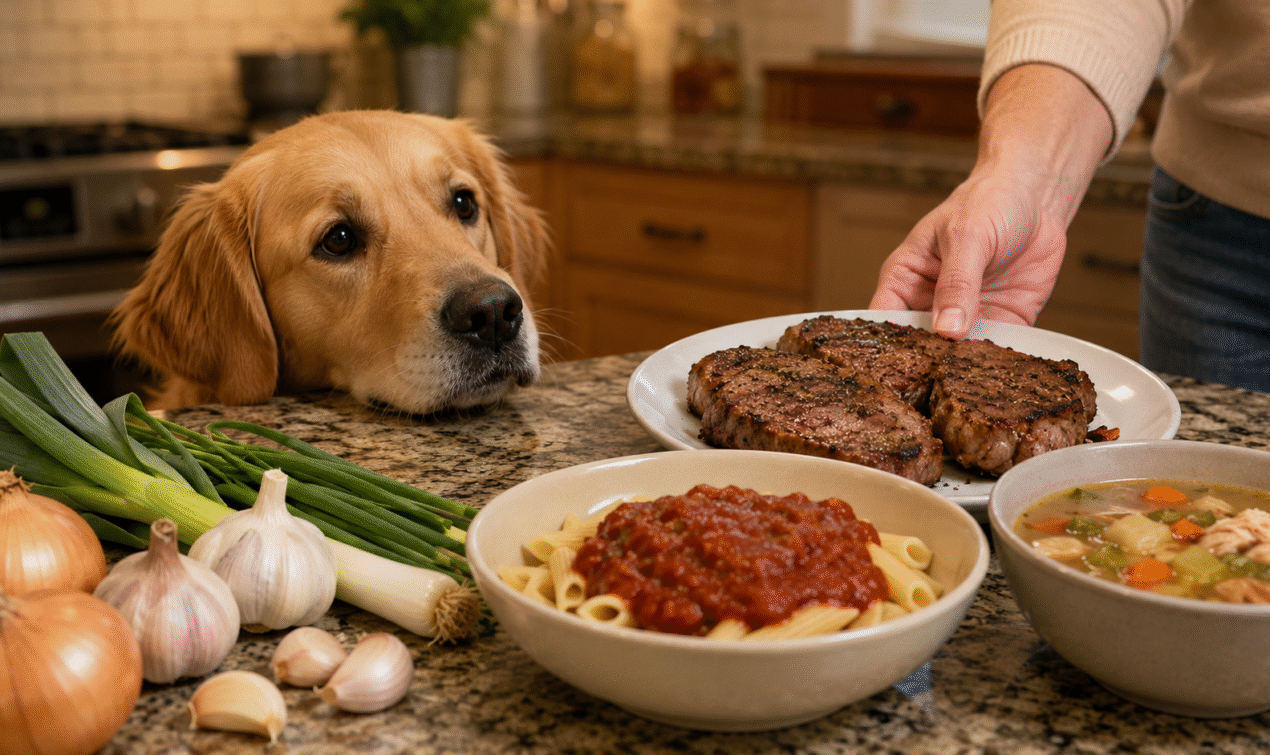
Onion is one of them. Garlic too. Same family: leeks, chives, that whole group. The tricky part is that dogs usually do not get handed a raw onion like a treat. The danger is in leftovers. Pasta sauce. Soup. Stew. Meat cooked with onion. Seasoning mixes. The stuff people forget about.
If there is onion or garlic in it, do not share it.

Wild mushrooms are another no. Some mushrooms from the supermarket may be less of a concern if cooked plain, but wild mushrooms are not something to guess about. Dogs sniff everything. Sometimes they eat things before your brain has even processed what happened. If your dog eats a mushroom outside, call the vet.
Avocado is also not worth it. Between the pit, skin, fat content, and possible stomach upset, there are better snacks. Much better ones.
Corn on the cob is another sneaky problem. Corn itself is not usually the scary part. The cob is. Dogs can chew and swallow pieces, and that can cause a blockage. So at a barbecue, watch the bin, watch the plates, and watch the dog who looks a little too innocent.
How to add vegetables without annoying your dog’s stomach
The best method is boring, but it works.
One vegetable at a time. A small piece. Then wait.
Not carrot, pumpkin, broccoli, and green beans all in one day. If your dog gets gas or loose stool after that, good luck figuring out what caused it.
Give a tiny amount, see how your dog does, and try again another day if everything looks normal. Watch for vomiting, diarrhea, itching, discomfort, or anything that feels off. Some dogs can eat a bit of carrot every day and never have a problem. Another dog gets soft stool from two bites of cucumber. That is just how it goes.
Cut everything into safe pieces. Cook the hard stuff. Wash raw vegetables well. Keep seasonings out of it. And remember that treats, including vegetables, should not take over the diet.
If your dog has diabetes, kidney disease, pancreatitis, allergies, ongoing stomach issues, or is on a special diet, ask your vet before making vegetables a regular thing. That is not being dramatic. That is just knowing when the internet should step aside.
In the end, healthy vegetables for dogs do not need to be complicated. A carrot slice while you cook. A few green beans instead of a biscuit. A spoonful of plain pumpkin when it makes sense. A cold cucumber piece on a hot day.
That is enough.
Your dog does not need a perfect bowl. Your dog needs food that is safe, simple, and right for their body. And maybe, if they are lucky, something crunchy from the kitchen every now and then.