
15 Zero-Waste Kitchen Ideas to Create a More Sustainable Home
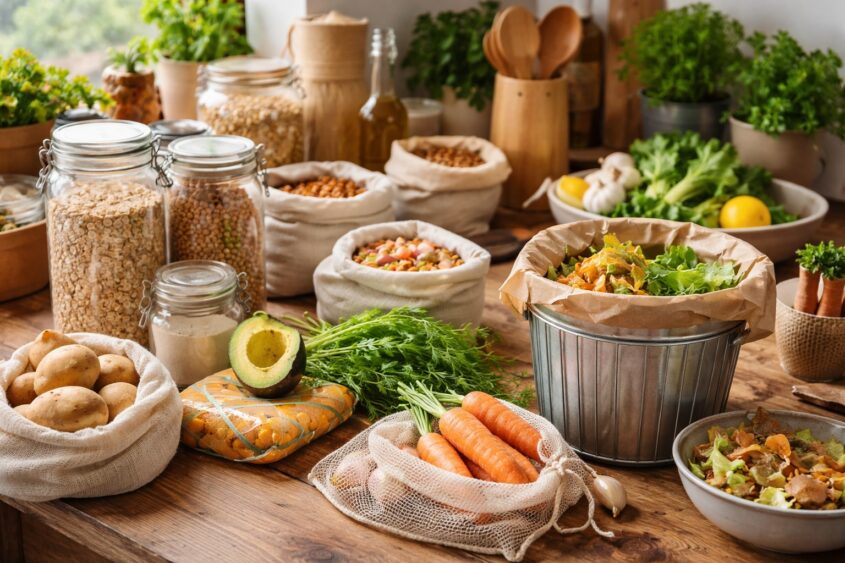
Zero-waste kitchen ideas help reduce food and packaging waste through smarter storage, reusable alternatives, composting, and more mindful daily habits.
Let’s cut through the noise for a second. If you’ve spent more than five minutes scrolling through TikTok or Instagram lately, you’ve probably seen “The Jar.” You know the one—that tiny, aesthetic mason jar where some impossibly organized person has managed to fit an entire year’s worth of trash. It’s beautiful. It’s inspiring. And for about 99% of us living in the real world—with screaming kids, 9-to-5 grinds, and kitchens that look like a disaster zone by Tuesday—it is utterly, soul-crushingly intimidating.
Here’s a secret the “eco-influencers” don’t always mention: Zero-waste isn’t a destination. It’s a marketing label that has, quite ironically, turned into another thing for us to buy. We feel guilty, so we go to Amazon and order a $200 “sustainable starter kit” that arrives wrapped in three layers of bubble wrap and a plastic mailer. We’re literally buying our way out of a consumption problem.
The kitchen is the heart of the home, but let’s be real—it’s also a high-speed waste processing plant. Between the plastic film that never sticks to anything but itself and the “science experiments” growing in the back of the fridge, it’s easy to feel like you’re failing the planet. But creating a sustainable home isn’t about being a saint; it’s about being slightly less of a disaster. It’s about being intentional. It’s about shifting away from the “throw-away” culture that was sold to us in the 1950s as the ultimate dream.
Ready to actually change things? Here is a deep, messy, and totally realistic guide to 15 ways you can overhaul your kitchen without losing your mind—or your savings account.
Best Zero-Waste Kitchen Ideas to Start With
1. Breaking the Paper Towel Fever
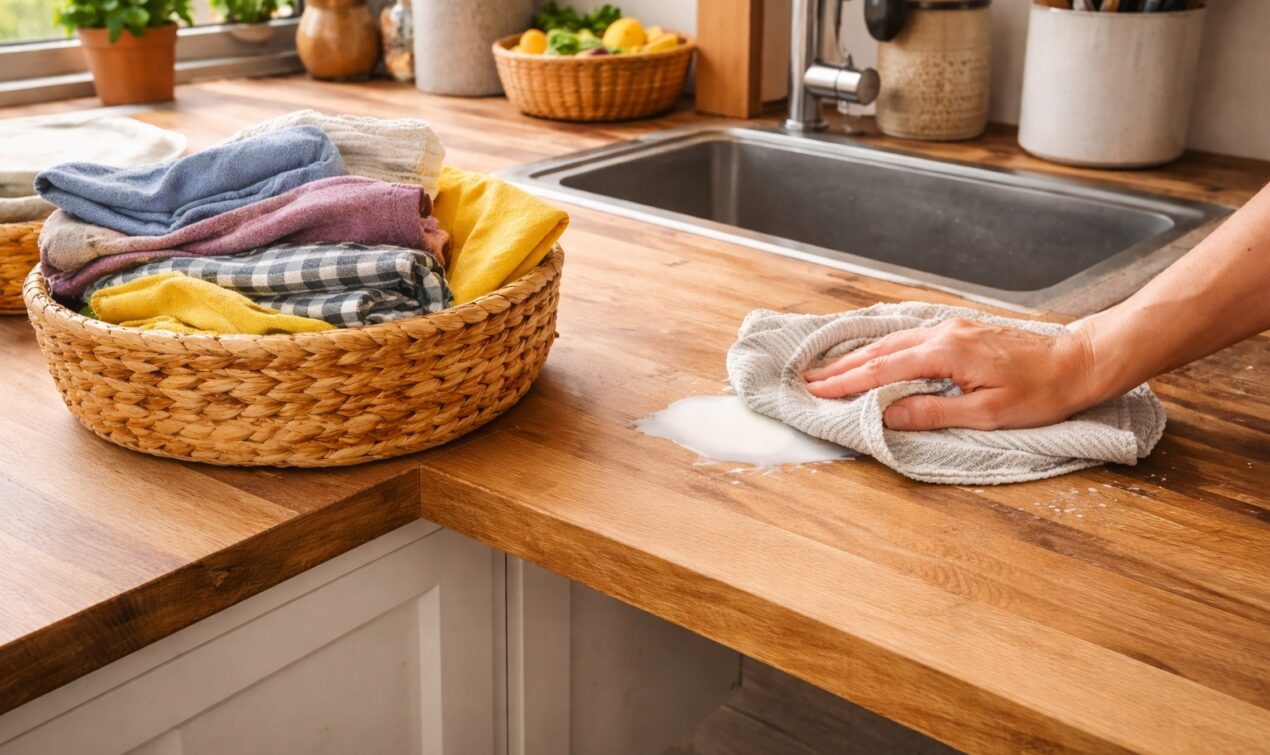
We are addicted to the “rip and toss.” Milk spill? Rip. Dirty hands? Rip. Dust on the counter? Rip. We’ve been conditioned to think that paper towels are the only hygienic way to clean. It’s a habit that is costing you a fortune and filling up your bin every single day.
The human solution? Stop buying them for a month. Just stop. I know, it sounds terrifying. Instead, gather up a bunch of old, stained t-shirts, cut them into squares, and put them in a basket. Or grab some of those Swedish dishcloths—they’re like a weird sponge-paper hybrid that is actually incredible.

The trick to making this work is having a “dirty bin” under the sink. Use the cloth, throw it in the bin, and wash them all once a week. Once you realize a cloth actually absorbs liquid instead of just pushing it around, you’ll feel like a genius.
2. The Great Jar Hoarding Habit
Plastic Tupperware is a lie. It claims to be permanent, but after one round of spaghetti bolognese, it’s stained orange forever. Then it loses its shape in the dishwasher, the lid disappears into a black hole, and you end up throwing it out.
A sustainable kitchen loves glass. But please, for the love of everything, don’t go buy a matching set. Your kitchen should look like a collection of stories, not a showroom. Save your jam jars. Save the big pickle jars. Save the weirdly shaped mustard containers.
They are free, they are durable, and they don’t leach chemicals into your leftovers. Plus, there is something deeply satisfying about seeing your pantry organized in recycled glass. It’s eclectic, it’s functional, and it costs $0.
3. Composting: It’s Not Just for People with Gardens
Most people think composting requires a massive wooden bin and a pitchfork. It doesn’t. When food scraps—like onion skins and coffee grounds—end up in a landfill, they get buried under tons of trash. Without oxygen, they don’t decompose; they rot and produce methane. That’s a huge problem.
If you’re in an apartment, look into “Bokashi.” It’s a Japanese method that uses a small bucket and some bran to ferment your scraps. No smell, no mess. If you’re lucky enough to have a garden, just start a pile. Seeing your “trash” turn into black, rich soil that makes your tomatoes grow like crazy is a total perspective shifter. You stop seeing a potato peel as waste and start seeing it as fuel.
4. Bulk Buying: Avoiding the Packaging Trap
The modern supermarket is basically a plastic museum. A box of crackers has a plastic bag inside, and each cracker is probably wrapped in more plastic. It’s exhausting.
Buying in bulk is the antidote, but here’s a tip: don’t try to do it all at once. If you try to refill 50 jars on your first trip, you will leave the store crying. Start with the basics—rice, pasta, oats, and coffee. Bring your own bags.
You’ll find that the food actually tastes better when it isn’t sitting in a plastic bag for six months, and your grocery bill will magically start to shrink because you aren’t paying for the brand’s fancy cardboard box.
5. Respecting the Shelf Life (Food Longevity)
We throw away an obscene amount of food in the West—roughly 40%. Usually, it’s because we’re just bad at storing it. We treat the fridge like a “set it and forget it” box.
Did you know that if you put your asparagus in a glass of water like a bouquet of flowers, it stays crisp for two weeks? Or that potatoes and onions are basically mortal enemies that make each other rot faster?
Taking 20 minutes to actually learn how to store your groceries is the single biggest “zero-waste kitchen ideas” move you can make. It’s about having a relationship with your food instead of just seeing it as a commodity.
6. The Slow Death of Plastic Wrap
I hate plastic wrap. It never sticks to the bowl, but it sticks to itself perfectly. It’s a single-use nightmare.
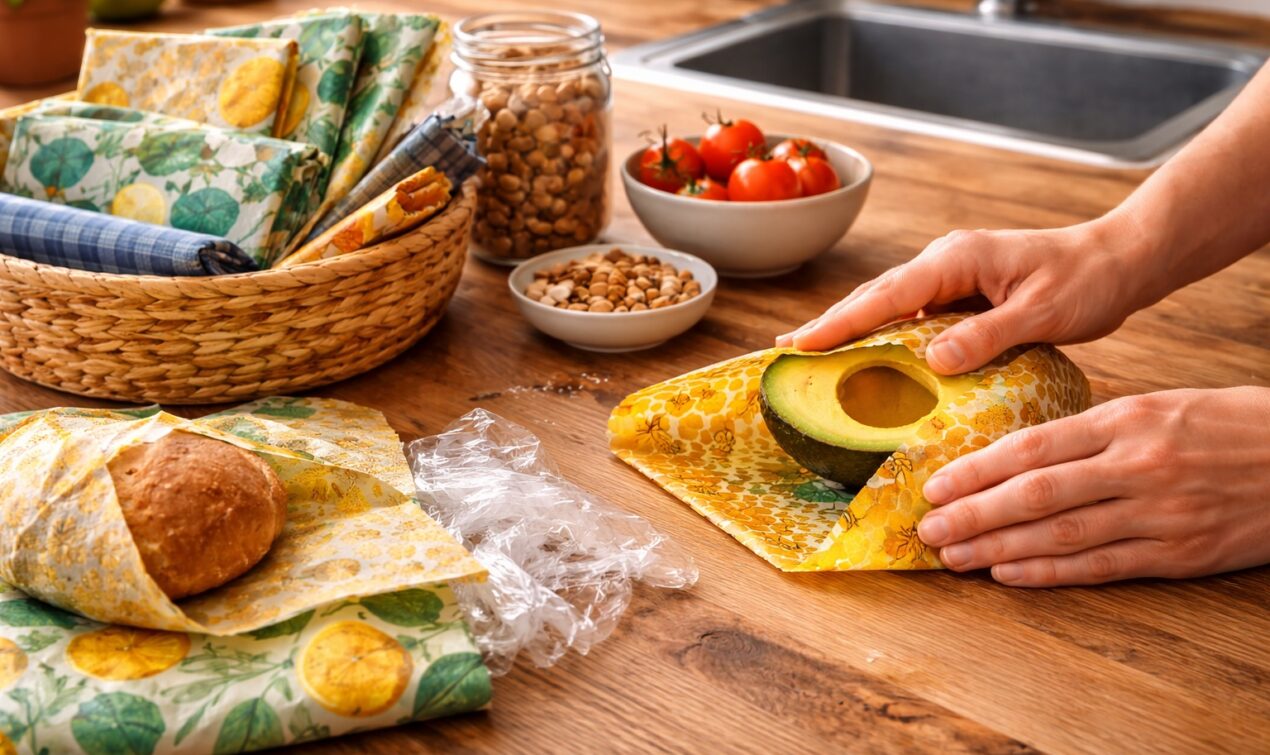
Beeswax wraps are the answer. They’re these colorful pieces of cotton coated in wax that you mold with the heat of your hands. They smell like a beehive (in a good way) and they last for a year.
When they get dirty, you wash them with cool water. When they finally die, you chop them up and put them in the compost. It’s a perfect, closed-loop cycle. No plastic, no frustration, no waste.

7. The Freezer “Scrap Bag” Strategy
This is my favorite “lazy” sustainability hack. Keep a big bag in your freezer. Every time you chop a carrot, peel an onion, or have some celery leaves left over, throw them in the bag.
Once the bag is full, dump it into a big pot of water with some salt and pepper. Let it simmer for a few hours. Suddenly, you have a rich, organic vegetable stock that wipes the floor with those salty cubes you buy at the store. You’ve given those “scraps” a second life, and you’ve saved yourself $5.
8. The Anti-Shopping List: Intentional Planning
Waste happens when we shop with our hearts instead of our heads. We go to the store, see some beautiful kale, and think, “I am a person who eats kale.” Three days later, that kale is a puddle of green slime in the bottom of the fridge.
Meal planning doesn’t have to be a military operation. Just spend five minutes looking at your week. If you know you’re working late on Thursday, don’t buy fresh fish for Thursday. Buy what you will actually eat, not what your “ideal self” wants to eat. It’s the ultimate cure for the “forgotten fridge” syndrome.
9. Root-to-Stem: Stop Being Picky
We’ve been taught to be incredibly wasteful with vegetables. We toss broccoli stems, beet greens, and carrot tops. Why? They are all delicious.
Try this: peel the tough outer layer off a broccoli stem and slice the inside—it’s the sweetest part of the plant. Sauté your beet greens with some garlic and oil. Roast your potato skins with some spices for a crunchy snack. When you stop seeing parts of the plant as “trash,” your grocery budget stretches so much further.
10. The Freezer as a “Pause” Button
The biggest mistake people make is waiting until food is “almost bad” before freezing it. By then, the texture is gone and it’s probably going to taste like freezer burn.
The pro move is to freeze things the moment you realize you won’t finish them. If you made a giant pot of soup and you know you’ll be sick of it by tomorrow, freeze half of it tonight. You’re locking in the freshness and creating a “lazy night” meal for your future self. It’s an act of kindness for the “Future You” who is too tired to cook.
11. Ditching the Plastic Sponge
Traditional sponges are actually kind of gross. They’re made of polyester or nylon, they shed microplastics into the water, and they become a bacteria colony within 48 hours.
Swap them for a wooden dish brush or a loofah. Fun fact: a loofah is actually a dried-out gourd, not a sea creature. It’s a plant! You can scrub your dishes with it, and when it’s done, it goes right into the compost. It’s a tactile, high-quality change that makes washing dishes feel slightly less like a chore.
12. The Chemistry of Vinegar and Baking Soda
The cleaning aisle is a scam. You don’t need twelve different plastic bottles to clean your house. You need vinegar and baking soda.
Vinegar cuts through grease like a pro, and baking soda is the perfect gentle abrasive for scrubbing the sink. Mix them with a little lemon juice, and your kitchen will smell like a Mediterranean garden instead of a chemical factory. You save money, you save plastic, and you keep your air cleaner.
13. Mesh Produce Bags (The Final Step)
Most people have mastered the reusable grocery bag, but we still grab those tiny, thin plastic bags for three apples. Why?
Get a set of mesh produce bags. They’re cheap, they weigh nothing, and they’re indestructible. Keep them inside your big grocery bags so you never forget them. It’s such a small change, but it eliminates hundreds of tiny plastic bags a year.
14. Energy Awareness: The “Kettle” Rule
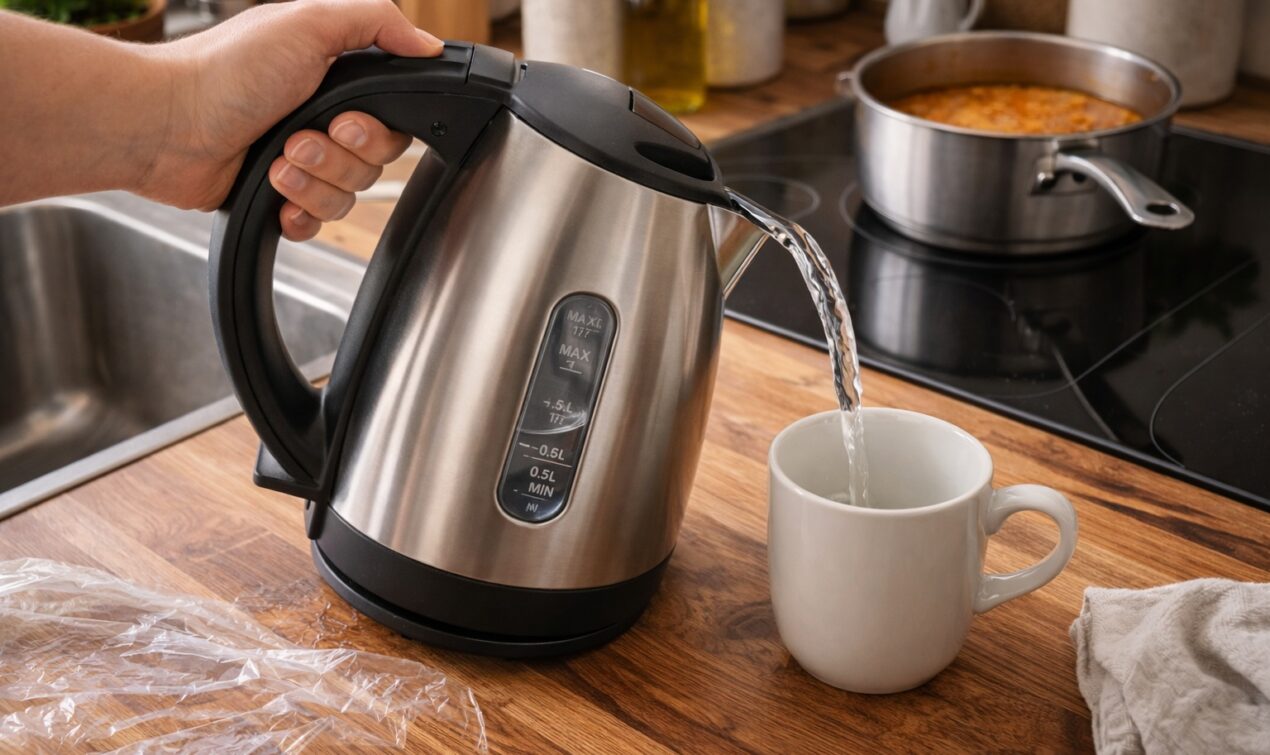
Zero-waste in kitchen isn’t just about what’s in your trash can; it’s about the resources you use. If you fill your electric kettle to the top just to make one cup of tea, you are wasting a massive amount of energy to heat water you won’t use.
It’s about “mindful physics.” Only use the energy you need. Run the dishwasher only when it’s full. Match your pot size to your burner. These tiny shifts in awareness align your home with the natural rhythm of the planet.
15. The “What Do I Already Have?” Audit
Before you buy anything—literally anything—look in your cupboards. We often buy new things because we’ve forgotten what we already own.
You probably have enough rags, jars, and mismatched lids to start a zero-waste revolution today without spending a dime. Sustainability isn’t a product you buy; it’s a mindset you adopt. It’s about valuing what we have instead of always looking for the next “upgrade.”
Progress Over Perfection: A Final Thought
If you try to do all 15 of these zero-waste kitchen ideas at once, you will fail. You will get frustrated, you’ll order a pizza in a cardboard box, and you’ll give up.
Don’t do that. Pick one thing. Spend a month mastering the “scrap bag.” Once that feels normal, move on to the jars. Real, lasting change happens through the slow, boring accumulation of tiny habits. Your kitchen doesn’t need to look like a magazine cover. It just needs to be a place where you feed yourself with a little more respect for the world around you.
At the end of the day, a zero-waste kitchen isn’t measured by the size of your trash can. It’s measured by the quality of your attention. Start small. Stay messy. Just keep going.