Luca Bartoli – Copywriter, digital nomad and “tech gypsy”
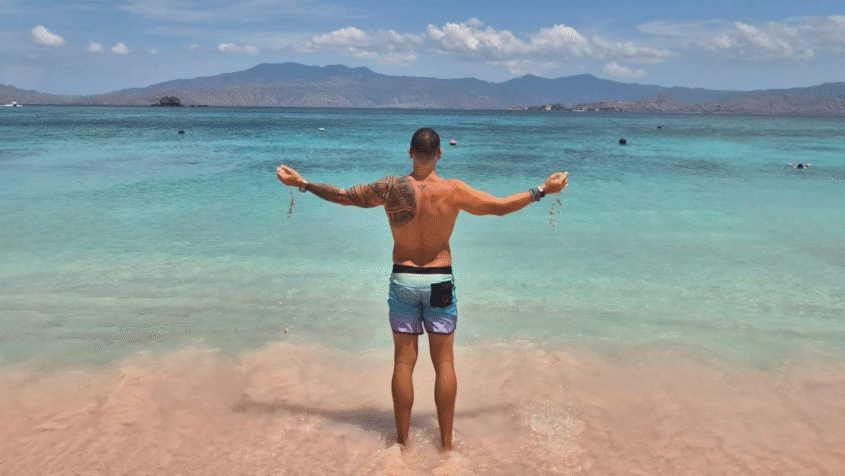
What if your office had no fixed address, your meetings happened across time zones, and your morning routine depended more on the ocean than on traffic? For Luca Bartoli, this isn’t a fantasy—it’s daily life.
After more than a decade in Milan’s advertising world, Luca stepped off the agency treadmill and rebuilt his career around freedom, results, and a laptop that travels as much as he does. Today, he works remotely from Cape Town to Southeast Asia, defines himself as a “tech gypsy”, and proves that productivity doesn’t need a fixed desk—or a fixed country.
In this interview, Luca talks about work, love, discipline, creativity, and what really changes when you stop designing your life around meetings and start designing it around time. If you’ve ever wondered whether a different way of working—and living—is actually possible, this conversation might stay with you longer than you expect.
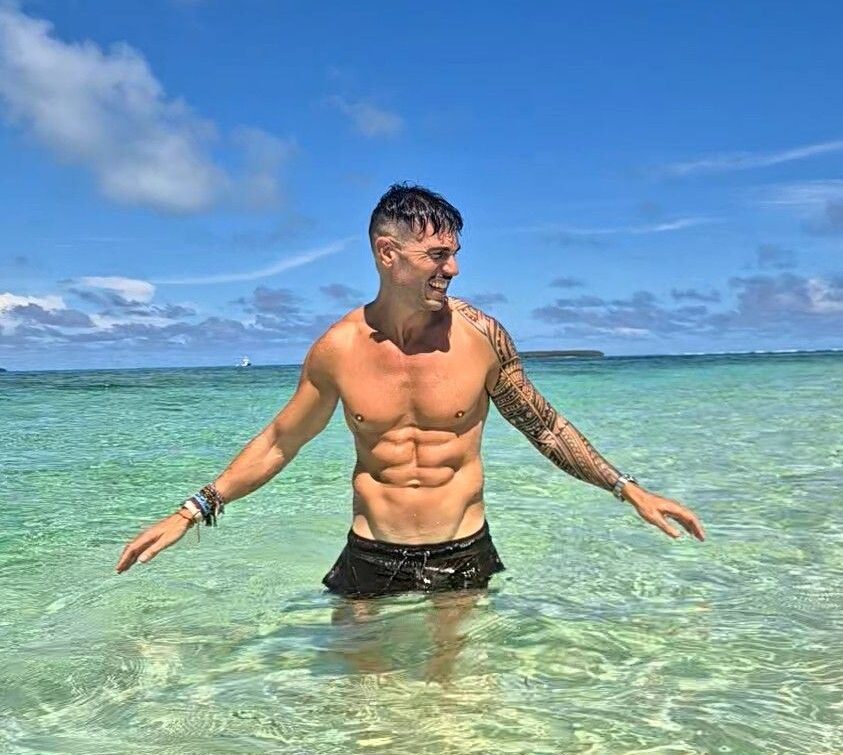
1) Luca, let’s start from the beginning. How did the idea of leaving Milan and turning your copywriting job into a nomadic lifestyle come about? Was there a specific moment that triggered everything?
Sure. Here’s the short version. I worked as a copywriter in advertising agencies from 2005 to 2017, mainly for large national and international brands. Then, after being laid off, in 2018 I decided to go fully freelance instead of looking for another agency job.
At the beginning, I honestly didn’t have big expectations. I just wanted to earn – after taxes and social contributions – more or less what I was making before, but on my own terms: my time, my schedule, my rules. That’s how my freelance journey started.
The truth is, I was much more productive that way. And from a market point of view, there was real demand for someone with my background and, if I’m being honest, with my skills. Also, my intuition to stop chasing big companies – who would always prefer agencies, no matter how good my CV or portfolio was – and focus instead on small, medium and even micro businesses turned out to be the right move.

The entrepreneurs running those companies weren’t looking for agencies. Many of them had already had bad experiences. They didn’t want endless meetings and presentations. What they really wanted was someone they could trust, someone they could delegate things to and who was focused on results. That was exactly me.
In agencies, I had often been told: “Why do you care if the client sells more or less thanks to your campaign? What really matters is winning awards. That’s how you build a career.”
And in fact, apart from my salary in the last few years, my career hadn’t really gone anywhere. I was a senior, yes, but I never became a creative director or anything like that.
After a very exciting start – the kind that makes you say “If this keeps going like this, I’ll sign right now” – I realised something important: I never met clients in person. At most, a few Skype calls (that’s what we called video calls back then, because it was basically the only platform) or some phone calls.
I was managing almost everything by email – from creative proposals to performance reports – without any face-to-face meetings. Clearly, small business owners don’t like wasting time, and neither do I.
That’s when a second thought hit me: “So… if I can do all of this remotely, why not do it from outside Italy? Maybe somewhere warm. By the sea.”
For the next four years, that became the plan. First, I focused on strengthening my business and growing both in numbers and in relationships.
Second, I selected only clients who didn’t need in-person meetings and constant calls.
Third, I worked on making sure that Laura – the person I still share my life with today – could also run a fully remote business.
That’s when the idea of registering psicoterapeuta-online.com came up, while she was finishing her psychotherapy training. The idea was to position ourselves in what we believed would become “the future of therapy”, by offering fully online therapy – with her being one of the first in Italy to do it.
We had no idea that, just two years later, Covid would suddenly make that future very real. Her practice took off, her virtual clinic grew, and eventually she was able to leave her job and dedicate herself entirely to online therapy.
And that’s how, in January 2022, we left for three months in South Africa, in Cape Town.
Digital nomads, on the same time zone – but literally on the other side of the world.
A few months later, we left again for six months in Southeast Asia, where we’ve ended up going back every single year since.
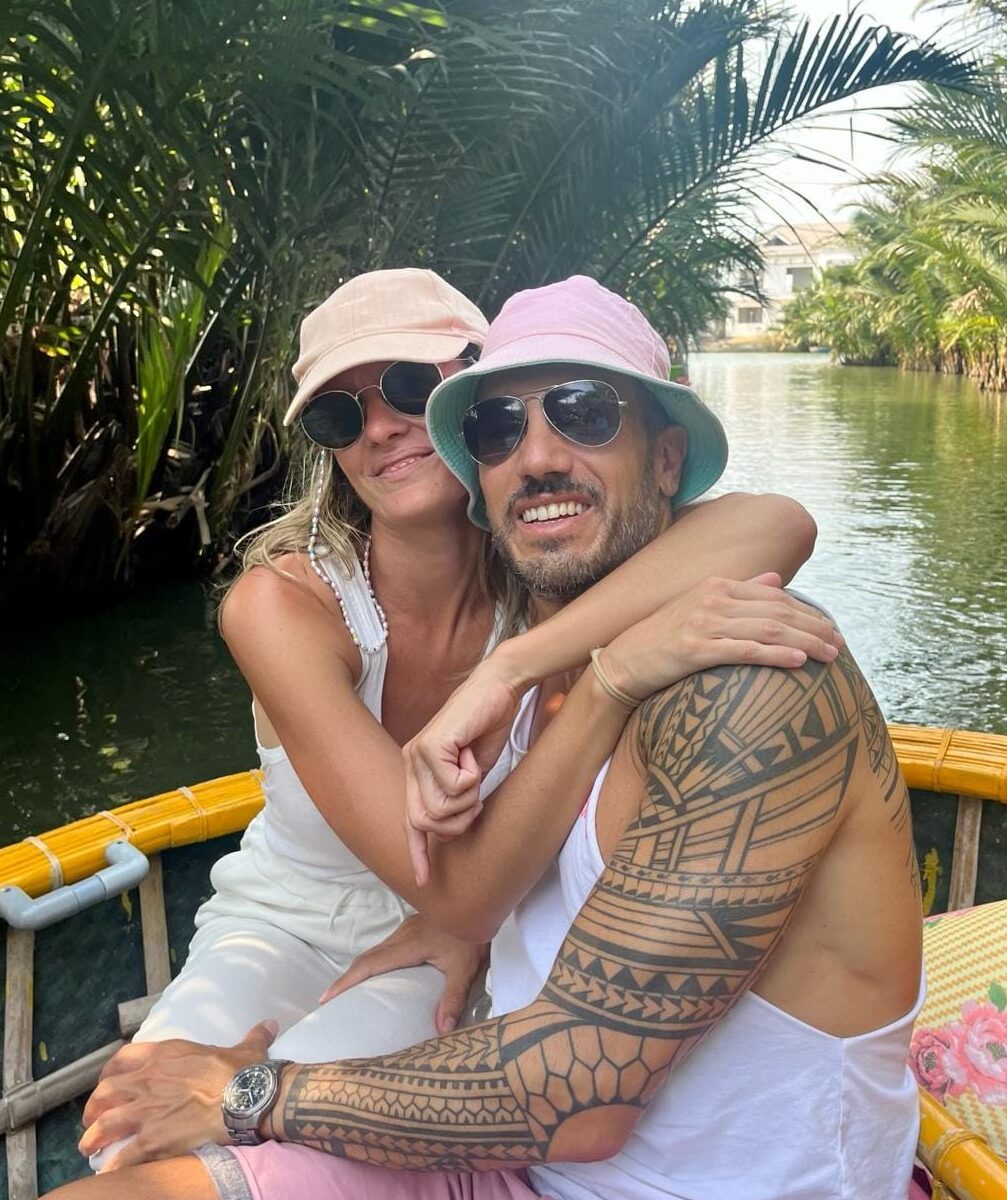

2) You and Laura often travel together, both for work and by choice. What’s it like to balance a relationship with two very different digital jobs that are both flexible? Do you also support each other professionally?
We always travel together. Over time, Laura realised that it actually helps her to spend a few weeks back in Italy during our long stays abroad. So sometimes she leaves first and I stay, and then we organise to meet again at the next destination.
After so many months together, I think it’s healthy to take a short break and allow some space. Where there’s usually presence, a little absence can be a good thing. It helps you not take each other for granted.
I call it “functional” because it works for me – I wouldn’t dare call it “therapeutic”, that would be stepping into her territory.
Yes, we’re both digital nomads, but our jobs are completely different and come with very different needs. I’m a total coworking animal. By now, I choose the coworking space first, then the gym, and only after that the house – ideally in a location that works well for both of us.
Laura, on the other hand, as an online psychotherapist, needs privacy. So she mostly works from home – which always has to have an extra room that becomes her studio – or from very well-organised coworking spaces, like Bali Bustle, which offers private “Skype rooms”.
Even the name is a bit pre-Covid.
We do support each other, yes.
I support her by managing the marketing campaigns for her online therapy practice. In fact, she’s the only “client” who has ever given me a KPI like this: one new paying client per week.
And she supports me by respecting my rule of: “Once I close my laptop, I don’t want to talk about work.” Even though I know she’d sometimes like to ask, “So… how did it go today?”
I really appreciate that.
Beyond this slightly weird habit of mine, being on the other side of the world together and basically being able to rely only on each other creates a very strong bond and intensifies everything.
3) As a nomadic copywriter, how does your creativity change when you move between countries, cultures and routines? Are there places you find more inspiring than others?
In reality, what I do today for most of my clients goes far beyond pure copywriting.
I still write, of course – and copy is still the core of my work – but my role is much broader.
I work on what comes before the writing, like market demand analysis and building a distinctive positioning, and also on what comes after, such as building and optimising campaigns to reach that demand and actually convert it.
Honestly, I don’t think some places are more inspiring than others – even though I admit I tend to spend time in places people generally consider “cool”.
What’s inspiring is travelling itself. Or better, “being nomadic”.
I even define myself with the hashtag #zingarotecnologico – tech gypsy.
From October to May, I change house every one or two months at most.
It’s a great exercise. It forces you to build a healthy routine very quickly, and at the same time it helps you really experience a place, without postponing things or saying “I’ll do it later”. Because you know that this chapter of your life – like everything else – has an expiration date.
Living like this helps you not take anything for granted. It also helps you stop keeping meaningful experiences on your bucket list forever.
I’d say this lifestyle has helped me in general, not only as a creative professional. It taught me how to fully enjoy every single day – even the nights when I work late, because something unique might happen that evening.
Maybe it’s just a long conversation with the person at the desk next to you, who also stayed until 2:30 a.m. at the coworking space for a completely different reason than yours.
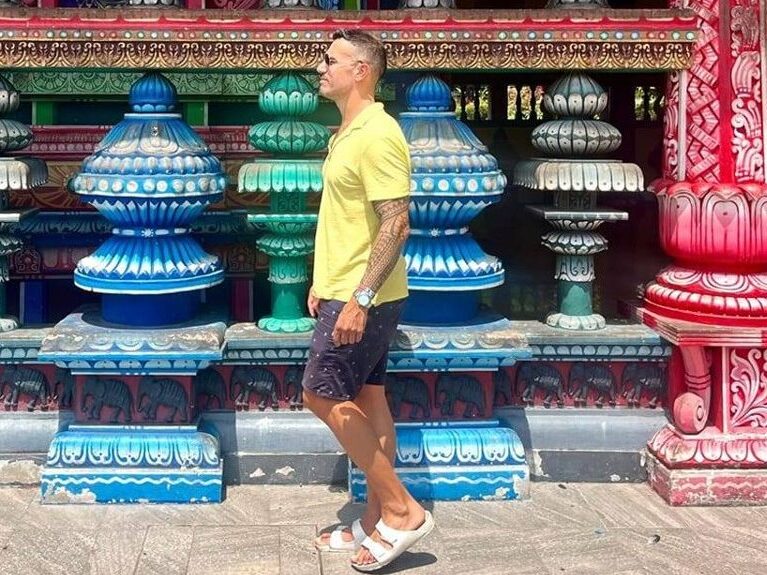
4) What have been the biggest challenges since leaving Milan – time zones, connection, discipline, distance – and how have you built them into your working method?
For me, working from Asia with a six, seven or even eight-hour time difference is actually easier.
After my first two years as a freelancer, with results that exceeded my expectations, I decided to give myself a reward: time. From that moment on, I chose not to work in the mornings anymore.
Until lunch, I train. And on rest days from the gym, I simply enjoy my morning: a walk, a coffee in town, a massage… anything, as long as it’s not work.
Work is for the afternoon – and if needed, the evening and even the night.
That decision changed everything for me, and I would never go back.
But as you can imagine, it’s not easy when you’re based in Milan.
In Asia, instead, with a six to eight hour time difference, I’m always ahead of deadlines. I literally have to schedule or delay the emails when I send my work, otherwise it looks like I finished everything way too early.
As for internet connections, it’s often easier here than in Italy.
Thailand, Indonesia (especially Bali), Vietnam, Malaysia and even some islands in the Philippines have understood that fast 5G networks and reliable Wi-Fi are essential to attract hundreds of thousands of digital nomads who are basically looking for three things: fast internet, safety and a relaxed lifestyle.
If you were referring to “human connections”, whenever possible – especially in Bali – I prefer to live in coliving spaces and work from coworking spaces, so I can meet people who share my lifestyle.
You can build great friendships, and it’s not uncommon to run into the same people again in another country, in another city. Some connections also happen at the gym.
Discipline, in my opinion, has nothing to do with where you are. You either have it or you don’t.
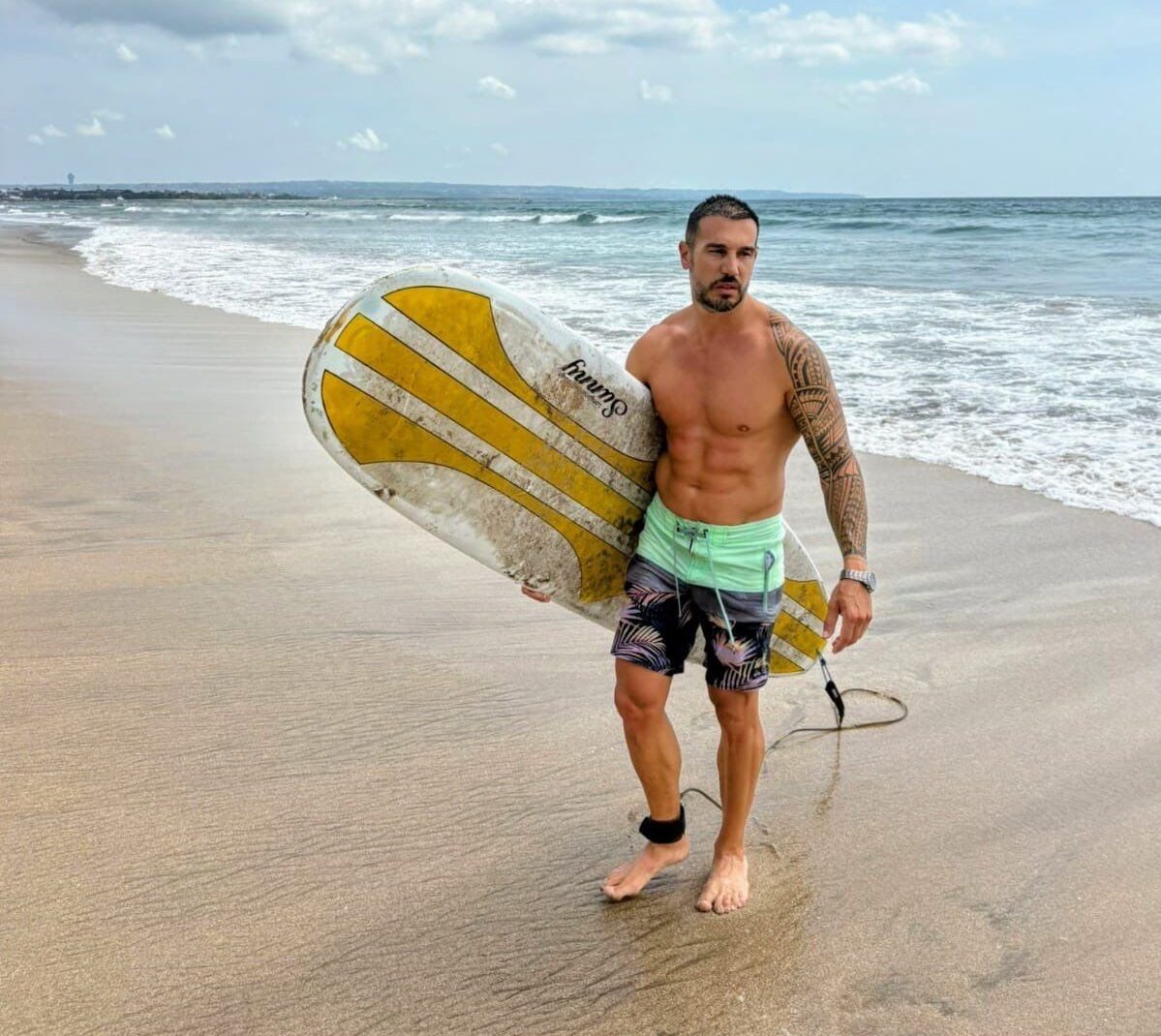
My routine is always more or less the same: gym, extra activities like surfing or SUP, long walks, cooking and eating well.
It doesn’t really change whether I’m in Milan, Bali, Bangkok or Siargao.
5) Writing also means observing. What have you learned about people and cultures since becoming a nomad, and how does this influence your writing?
I often find myself talking to people for a long time.
It might be a local telling me what this place was like twenty years ago.
Or a retired expat who packed up his entire life and moved to the other side of the world.
Or someone who took a sabbatical year to figure out “what they want to be when they grow up”.
I love stories. I’m genuinely fascinated by the reasons behind people’s life choices – which are very often based on incomplete information, wrong assumptions and ideas that appeared almost by accident.
That’s the magic of life. Whatever we choose to do will mostly have unpredictable consequences. And the difference between a success and a disaster often lies more in the emotional state of the person telling the story than in any objective indicator.
Many of these stories could easily become a movie, a series or a novel. All you’d need is the time, the opportunity and the desire to write them in a compelling way.
That’s exactly what I try to do in my work – whether I’m writing website copy for a company and its products or services, or answering an interview like this one, trying to spark the reader’s curiosity and keep them engaged beyond the fifth question.
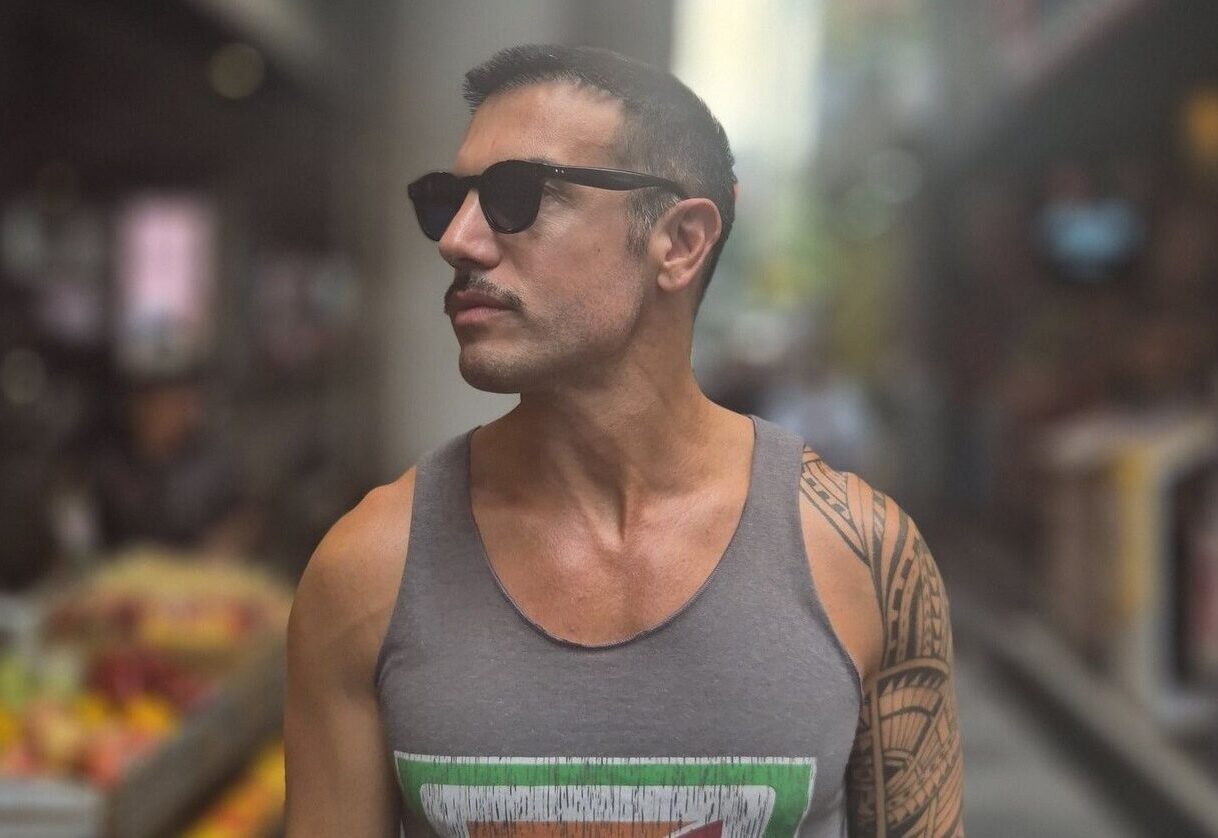
6) You and Laura live a very interesting balance: she supports people through personal and psychological change, while you help companies and professionals communicate better. Do you influence each other’s work?
We’ve been together for ten years.
Even if one of us were a table and the other a chair, we would still influence each other.
We’ve literally grown together, coming from completely different backgrounds, studies and life approaches.
This semi-nomadic life is something we built together and consciously choose together, every single year.
Personally, I’ve grown a lot thanks to Laura, also professionally. And through her, I learned that work is only one part of who we are – both as individuals and as a couple.
Before her, I was much more focused on working, working, working.
7) What does a typical day look like for you when you’re travelling? Do you have rituals or habits that help you keep structure despite the nomadic lifestyle?
We both love waking up early.
We see time zones as an opportunity, not as an excuse to sleep in and waste the morning.
Whoever wakes up first brings coffee to the other one – we travel around the world with a very Italian moka pot.
We spend some quality time together in the morning, then the day starts: breakfast, gym (or surfing), a walk… and suddenly it’s lunchtime.
From there, our afternoons split between coworking and working from home.
That’s our weekday routine, more or less.
At the weekend, we usually go on short trips to explore the area more deeply and properly experience the place we’re in.
8) Looking ahead, where would you like this lifestyle to take you? Do you have a dream destination, a long-term project or a future chapter you’d like to build with Laura?
I have to admit it: lately, I feel a bit short on dreams.
Probably because – also and especially thanks to Laura – I’m already living my dream right now.
So the only thing I’d really like is to rewind the last four years and play them again.
This time at 0.5 speed.
They say that when you slow things down, you enjoy them even more.
Thank You, Luca!
Before you leave this page, we would like to sincerely thank Luca for the time, generosity and openness he dedicated to this interview.
This conversation is not only about digital nomad life or remote work. It is about consciously choosing a different rhythm, redefining what success really means, and building a professional path that fits life — instead of forcing life to fit work.
Luca shared his story with honesty, nuance and depth, allowing us to step into both the practical and human side of a lifestyle that is often romanticised, but rarely explained so clearly.
If his perspective on work, freedom and intentional living resonated with you, we warmly invite you to keep following his journey and get in touch with him through his official channels:
Luca Bartoli
Website: copywriter.lucabartoli.info
Instagram: @theWolfofGiambellino
Phone: +39 347-4774772
Email: info@lucabartoli.info