Can Digital Nomad Pay 0% Tax Legally? Dubai Residency and US LLC Explained
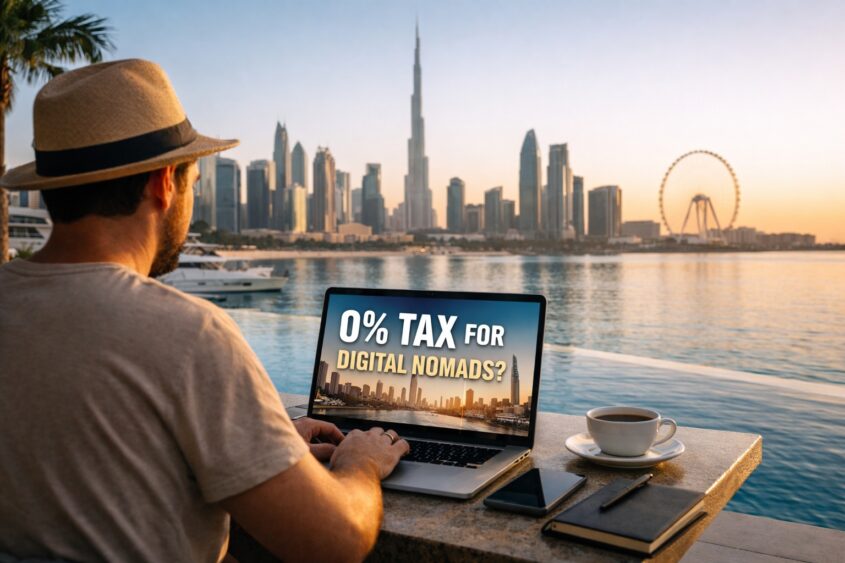
Can You Really Pay Zero Tax as a Digital Nomad?
Learn how digital nomad tax can be reduced using Dubai residency and a US LLC, with key rules, limits, and practical insights.
Ever dreamt of working from a café in Bali, a co-working space in Mexico City, or watching the Dubai skyline from your window—and keeping all your hard-earned money? I know, it might sound like one of those too-good-to-be-true Instagram promises. But after digging into the legal details (and watching fellow digital nomads do it successfully), I’m convinced: this 0% digital nomad tax strategy is not only possible, it’s genuinely doable today. And no, there’s nothing shady or offshore about it—just a clever, well-structured approach.
Understanding how digital nomad tax works is the first step. If you’re a freelancer, remote entrepreneur, or you run an online business, you’ve probably felt that pain: the more you earn, the more tax takes a bite. Finding a solution is about more than money. It’s about peace of mind—knowing banks won’t freeze your cards, that clients trust you, and, let’s be honest, not lying awake wondering what tax office will knock next.
So, what’s the recipe for this zero-tax freedom lifestyle? Two core ingredients: Dubai tax residency and a US LLC. Let’s break it down, nitty-gritty style.

Step 1: Why Dubai? (And How to Make It Work)
Okay, I’ll just say it: Dubai isn’t everyone’s cup of tea. Maybe you prefer jungle vibes or European walks. That’s fine. But when it comes to digital nomad tax, Dubai is often the first place people look at—and for good reason.
From a tax perspective, Dubai offers a very favorable environment for individuals, especially when paired with the right international structure.
Here’s the logic:

Set up a Dubai holding company. This is your business HQ. It’s not complicated—the paperwork can be done in weeks, especially if you use an established agency (yes, someone like Gen Zone can sort everything: company setup, bank accounts, even residency visa).
Spend time in Dubai to build your tax residency position. Why does tax residency matter? Because your home country’s tax authority will let go only if you show you’re truly living “elsewhere” (trust me, if you’re from one of those ‘sticky’ countries—shoutout to fellow Finns, Germans, Brits, and Canadians—you know what I mean).
But wait—a common objection: “Do I really have to live in Dubai all year?” Not necessarily. Many digital nomads structure their year flexibly. Honestly, after spending a couple of November weeks there, I found it surprisingly enjoyable: healthy food, solid gym culture, buzzy expat networking, and, if you time it right, great weather while the rest of Southeast Asia is stuck in rainy season.
For the rest of the year—Bali, Vietnam, Bangkok, Tbilisi, Mexico… the world’s still your oyster. It’s important to remember that managing your digital nomad tax properly also means understanding how different countries define tax residency.
Step 2: Open a US LLC for Global Business Flexibility
Why make things complicated with a US company? Because, frankly, the United States has unbeatable business credibility. If you run transactions through a US LLC, payment processors (Stripe, PayPal, banks) and clients worldwide trust you more. Doors open.
From a digital nomad tax perspective, the US LLC is often used as a clean and flexible invoicing vehicle for international clients.
The key idea is this: if you’re not a US resident and you don’t operate physically in the United States, your tax treatment may be very different depending on how your activity is structured and where it is considered to be carried out. In many cases, income is taxed where you are considered tax resident—which, in this structure, points back to Dubai.
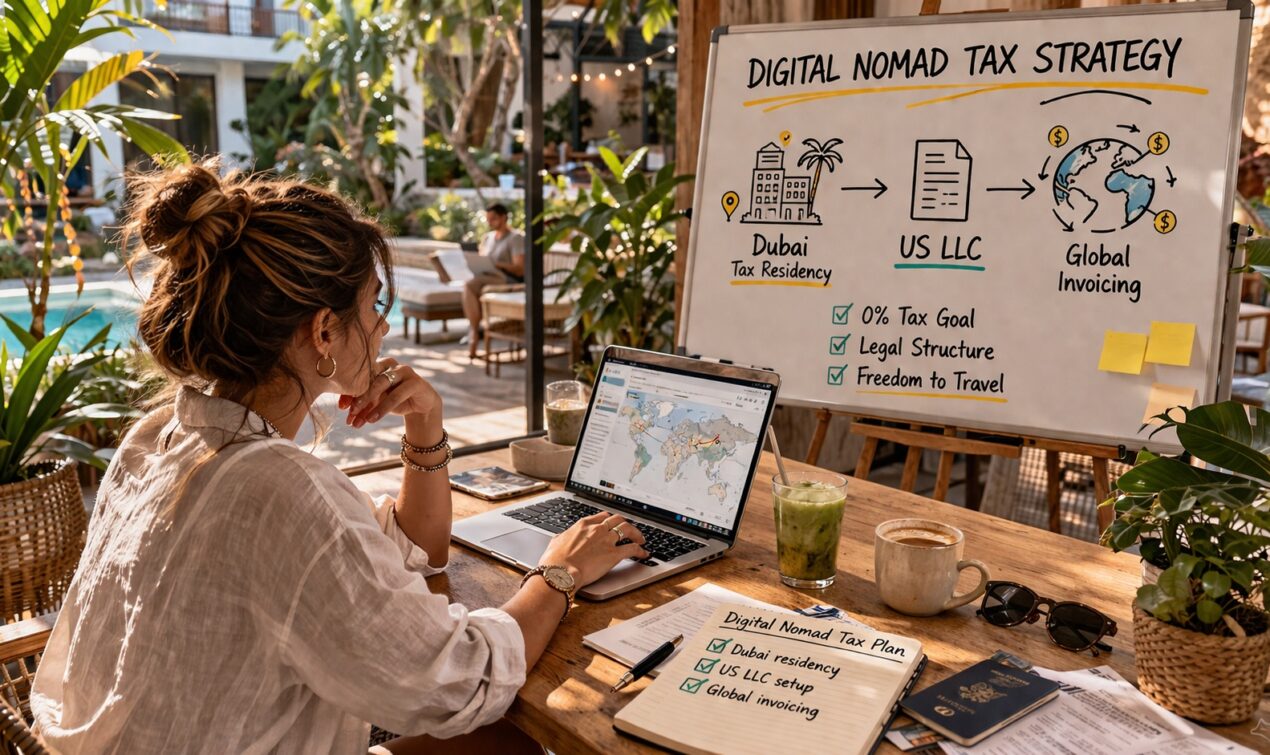

How does it work in practice? Picture this:
- Invoicing clients in Europe, the US, or Australia? You use the US LLC—easy, fast payments, minimal friction.
- Revenue flows through your structure efficiently, without unnecessary complications.
- The paperwork is relatively simple. Setup costs about $300–500 upfront, with a couple of filings per year going forward.
I know several content creators, developers, and ecommerce entrepreneurs who use this exact setup. It’s not a loophole—it’s structured, international planning.
Do You Really Need Dubai Tax Residency?
Not always. Some countries don’t force you to show proof of new tax residency the moment you leave. Others (looking at you, Scandinavia) want evidence.
In reality, the first year after you leave your home base, things are often in flux anyway. If you want to build a solid digital nomad tax strategy, it’s usually safer to have a clear residency position—at least initially. It makes opening bank accounts, using PayPal, and accessing global platforms much smoother.
In any case, a Dubai company alone already gives you access to world-class banking, legal clarity, and seamless payments. You don’t necessarily need to stay there all year unless your personal situation requires it.
Life on the Move—And Avoiding Tax Traps
With this whole structure in place, you’re free to move. Want to chase the best weather or coworking scenes? Spend spring in Lisbon, summer in Tbilisi, autumn in Dubai, and winter somewhere tropical.
But a word of warning: don’t stay too long in any one country unless you’re ready to deal with local tax implications. One of the biggest mistakes in digital nomad tax planning is assuming that movement alone protects you—it doesn’t. What matters is how your presence is interpreted legally under local tax residency rules.
And be honest about your movements. Some bureaucracies are more lenient, some want proof of every flight booking, so keep good records—just in case.
Step-by-Step Recap: Setting Up Your Own Strategy
Let’s boil it down:
- Register a Dubai holding company (handle with pros like Gen Zone if you want the smoothest ride).
- Establish a clear tax residency position where needed.
- Create a US LLC for global invoicing and flexibility.
- Structure your income flows efficiently across entities.
- Stay mindful of where you spend your time to avoid unwanted tax residency.
Final Thoughts
It’s not theory—this is what many digital nomads and online entrepreneurs are already doing. Is it always easy? No. There’s paperwork, costs, and sometimes complex situations to navigate.
But compared to the alternative? It can be a powerful way to optimize your situation.
In the end, digital nomad tax isn’t about “paying zero at all costs.” It’s about understanding the rules, using them correctly, and building a structure that works for your lifestyle.
So, are you tempted? Or maybe you’re reading this while sitting in a noisy hostel, wrestling with PayPal limitations, daydreaming of more freedom. If so, now you know: with the right structure, the world really does open up.