Rural Lifestyle: The Real Story Behind Life at Ferri Farm
There’s a version of countryside life we all carry in our imagination: slow mornings, golden light over the fields, the scent of lavender in the air. It feels peaceful, almost effortless—like stepping into a simpler, better world.
But what happens when that image meets reality?
At Ferri Farm, rural lifestyle doesn’t follow aesthetics—it follows nature. Days begin early, responsibilities never pause, and every season brings its own rhythm, challenges, and quiet rewards. It’s a life built not on escape, but on choice. A choice to slow down, to observe, to adapt—and to belong.
In this interview, Ferri Farm takes us beyond the romantic narrative and into the truth of living close to the land. A story of courage, family, and rediscovering balance in a world that rarely stops.
What Rural Lifestyle Really Means: Beyond the Romantic Image
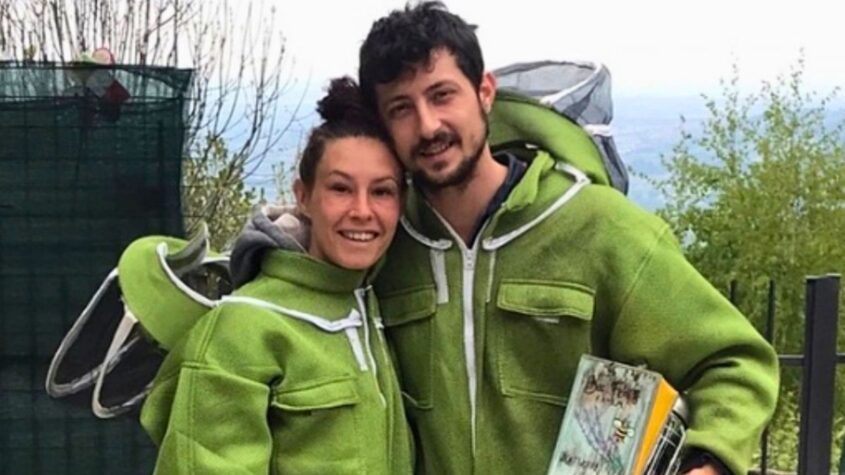
To begin with, would you like to introduce yourselves to our readers? Who are you, where do you live, and how did the Ferri Farm project come to life within your family story?
We come from a small town in the province of Novara, the place where we were both born and raised. Despite our roots being there, at a certain point in our lives we started to feel less and less connected to that area. Job opportunities were also quite limited, so we decided to do something simple yet at the same time quite bold: we started sending out our CVs across Italy, without really knowing where that decision would lead us.
The first responses came from a company here in the province of Cuneo. We didn’t think twice—within a very short time, we packed our bags and left almost overnight, leaving behind our hometown to begin a completely new chapter.

When we had the opportunity to buy a house, we deliberately chose one in the heart of the woods, surrounded by nature. We wanted our children to grow up observing the natural cycles of the seasons, breathing clean, fresh air, getting dirty while playing like children used to, staying away from technology, and exploring the world around them.
The same goes for our animals—we already had some, and we wanted them to live in a way that was as close as possible to their natural behavior and needs.
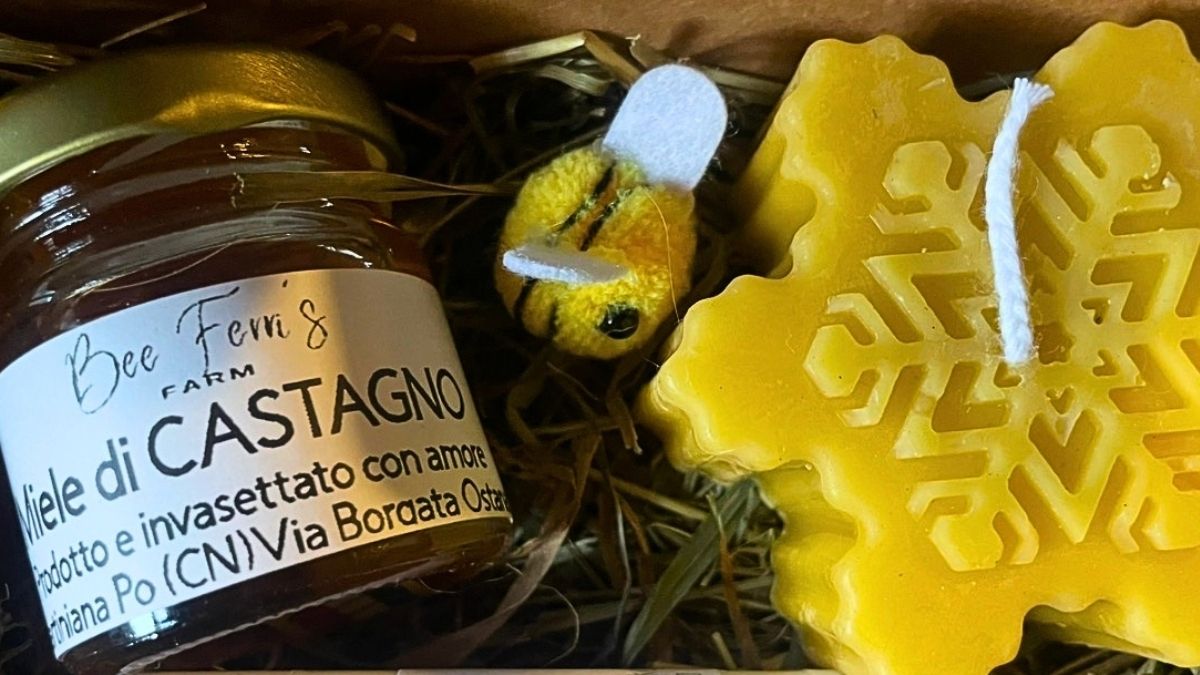
Later on, we started keeping bees, both out of passion and as a way to help protect a species that is increasingly at risk due to pollution. As we learned more, we decided to plant medicinal herbs to provide them with a natural food source. Once our bees have finished foraging on the flowers, we then harvest them ourselves to produce what we use throughout the year: herbal teas, ointments, soaps, jams, and more.
From your story, it’s clear that your daily life is deeply connected to natural rhythms—between bees, lavender, and working the land. Was there a specific moment when you realized this would become a lifestyle, not just a job?
Let’s say that even at the very beginning of our relationship, my husband and I would spend hours and hours walking in the woods, because that environment made us feel truly good.
Honestly, we first realized that this was our idea of rural lifestyle, and only afterwards did we try to turn it into a job. So there wasn’t one specific moment. What we did understand, though, was that the stronger our connection with the land became, the more positively it affected our mood.
That’s why we decided to put down roots in a place like this. We finally found a place that truly feels like home.
Through your channels, there’s a very authentic vision of rural life—far from any idealization. What does it really mean to live and work in nature every day, beyond the romantic imagery?
Living a rural lifestyle every day is very different from the romantic image people often have from the outside.
Of course, there are wonderful moments: the silence of the fields early in the morning, the scent of blooming lavender, the buzzing of bees on sunny days. But reality is also made of hard work, unexpected events, and constant responsibility.
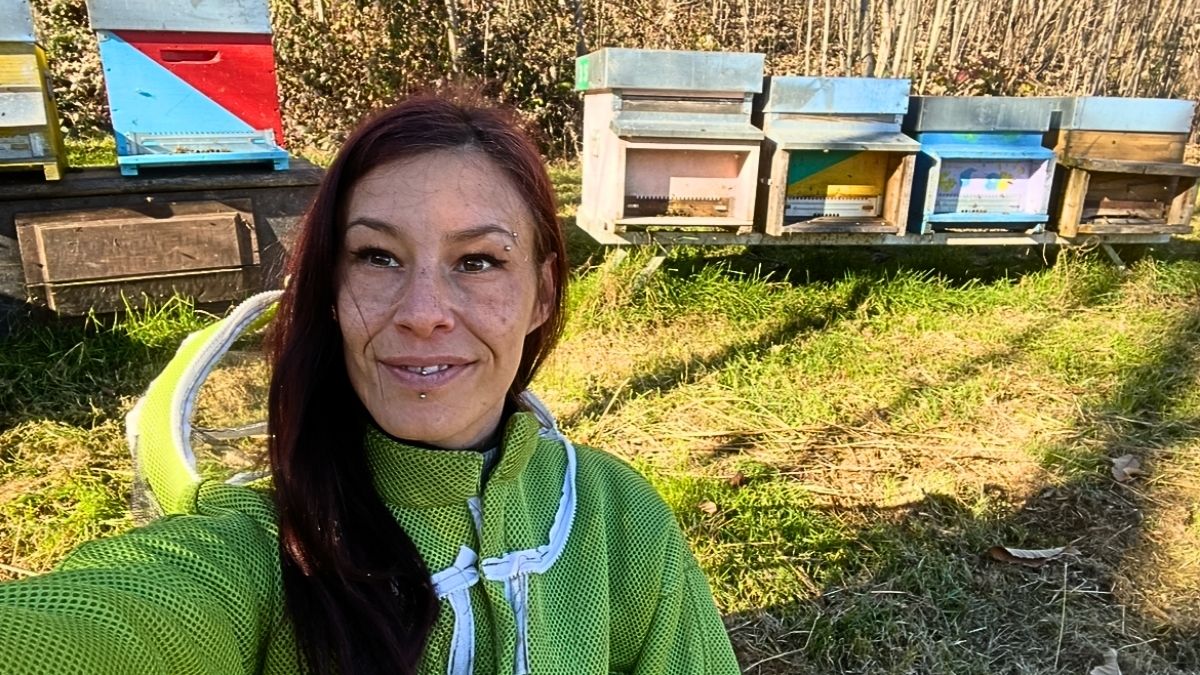
Nature doesn’t follow our schedules—it follows its own rhythms. There are long days, seasons when work never seems to end, and moments when you have to deal with challenges related to climate, the land, or the animals we care for.
At the same time, though, it gives so much back. It teaches patience, attention to small signals, and the value of time. Every result comes slowly, but precisely because of that, it carries a deeper meaning.
For us, living this way means accepting nature for what it truly is: not just beauty, but daily commitment. And it’s exactly this balance between effort and wonder that makes this life so authentic.
Our animals need to be fed every single day, whether it’s sunny or raining—whether you’ve worked ten hours or you’re feeling unwell with a fever.
At the end of summer, for example, we prepare firewood. It’s very hard work, but in winter, when you light the fireplace, you enjoy it fully because you know how much effort went into it—and it gives back that unique atmosphere only a real fire can create.
Yours is also a story of family and sharing. How has working together transformed your perception of time, relationships, and balance?
Without a doubt, in a positive way.
Working together made us realize that we are truly on the same wavelength—we already shared the same values, and this has allowed us to share both the struggles and the satisfactions of our work in a way that makes you forget about the clock.
We share beautiful moments—even something as simple as cleaning out the manure from our animals becomes an opportunity to spend time together, maybe taking a ride on the quad.
Even extracting our honey, which we do at night for various reasons, allows us to enjoy the silence of the forest and makes that moment even more romantic.
We are not just a family—we are a real team. And that transforms work from being “just work” into meaningful, enjoyable moments we experience together.
Working with animals and the land requires constant attention and adaptability. What is the most important lesson you’ve learned from observing nature?
Without a doubt: patience and balance.
We live in a society where everything is fast and just a click away. Nature, on the other hand, teaches us that everything has its own time—you can’t pick blueberries in December.
Another lesson is that everything requires care and attention, and the same applies to relationships.
Balance is something nature has taught us as well. When there is harmony—between climate, well-tended soil, and respect for microorganisms instead of immediately using chemicals just because an insect is damaging a plant—everything works.
But if something in this cycle changes, everything else changes too.
It’s truly about learning to observe more and intervene less. Less control, more listening.
Many people imagine rural lifestyle as something simple and romantic…What is the most common misconception you encounter when sharing your lifestyle?
Many people imagine life in the countryside as something simple and romantic: silence, nature, and slow rhythms. And in part, that’s true—but what often goes unseen is all the work behind it.
The reality is made up of very long days, constant unexpected events, and a great deal of responsibility. Animals and land require constant presence—there are no real breaks or fixed schedules.
Week-long seaside holidays, or even 10-day trips, are no longer possible. Sometimes even leaving for a weekend can be very difficult.
At the same time, though, it’s a life that gives so much in return. It’s not easier—it’s simply different. It requires commitment and adaptability, but it gives back a sense of connection with nature and with what you do every day that is very hard to find elsewhere.

If you could leave our readers with one reflection about the relationship with food, the land, and natural rhythms, what would it be?
If we could leave one reflection, it would be to truly try to listen to nature again.
Nature is constantly speaking, but in our daily lives we are often too used to rushing to notice it.
Living a rural lifestyle in close contact with the land has taught us that everything has its own time: seeds need seasons to become fruit, bees follow the rhythm of flowers, and we too are part of that same cycle.
For example, in winter we slow down significantly, while in warmer seasons our pace increases a lot—just like nature itself.
Maybe that’s the real secret: remembering that we are not separate from nature, but part of it. When we learn to accept its timing, its pauses, and its changes, we also find a sense of balance within ourselves.
Nature doesn’t ask much from us—just to be observed, respected, and lived with greater awareness. And when you learn to do that, you realize it gives back far more than you could ever imagine.
A heartfelt thank you to Ferri Farm for sharing their time, their story, and such an honest glimpse into a life that goes far beyond the surface.
If this conversation resonated with you—even just a little—we invite you to follow their journey and discover more of their daily life, their work, and their connection with nature.
🌿 Follow Ferri Farm on Instagram: https://www.instagram.com/ferri.farm/
Because sometimes, slowing down and observing a different way of living can be exactly what we need to see things more clearly.