
Balancing Work and Travel as a Nomad: What Actually Makes It Sustainable
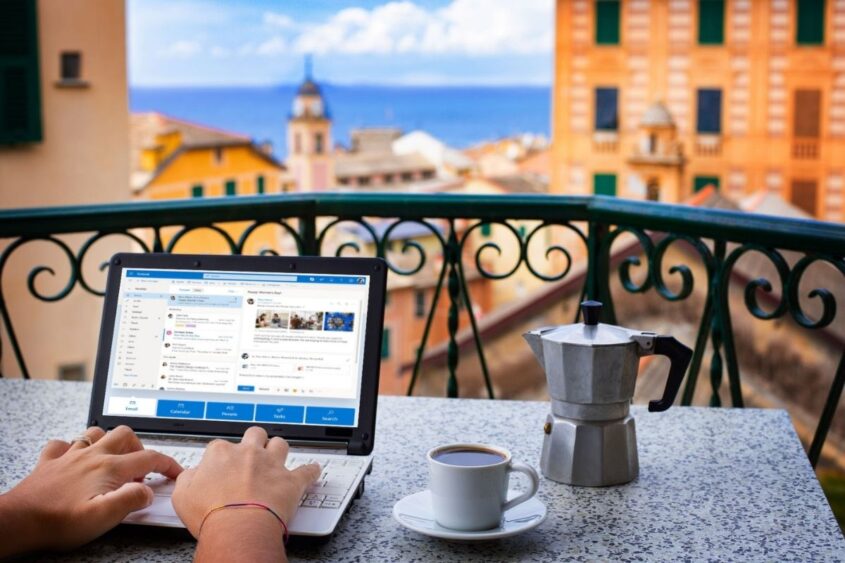
The fantasy is easy to sell: a laptop on a beach table, a cold coffee sweating beside it, a few productive hours before sunset, then a swim and dinner somewhere unforgettable. The reality of balancing Work and Travel as a Nomad is less cinematic and far more technical. It depends on routines, boundaries, energy management, reliable infrastructure, and a surprising amount of restraint.
That is often the first shock for people drawn to the nomadic lifestyle. Freedom is real, but it rarely looks like constant spontaneity. In most cases, the people who manage to keep moving without burning out are not the ones chasing novelty every day.
They are the ones who build systems strong enough to survive timezone shifts, delayed trains, unstable Wi-Fi, noisy apartments, client calls at odd hours, and the quiet exhaustion that comes from never being fully settled.
A lot of remote workers discover this only after the first few months. Travel, by itself, takes energy. Work takes energy too. Put them together without structure, and the result is not freedom. It is chaos with nice scenery.
The biggest mistake: treating travel days like normal workdays
One of the most common problems in digital nomad life is the refusal to admit that movement has a cost. Flights, check-ins, border crossings, packing, unpacking, finding a SIM card, figuring out transport, adjusting to a new bed, a new kitchen, a new neighborhood — none of that is neutral. Even when it goes smoothly, it drains attention.
Many people make the same mistake at the beginning: they schedule a full workload on a transit day and then wonder why everything feels harder than it should. A situation that comes up again and again is the belief that a three-hour flight only costs three hours. In practice, it can swallow half a day or more, especially once commuting, waiting, delays, and the mental fragmentation are factored in.

The difference between a sustainable rhythm and an exhausting one often starts here. Travel days need lighter expectations. Not “try to squeeze in everything anyway,” but real margin. Emails, admin, small revisions, background tasks — those are usually manageable. Deep work, creative problem-solving, or client-facing calls are another story.
Slow movement almost always beats constant movement
There is still a stubborn idea that a successful nomadic lifestyle means seeing as many places as possible. It sounds exciting, but in reality, fast-moving itineraries tend to destroy focus. Constant relocation creates decision fatigue, reduces sleep quality, and leaves very little room for the kind of concentration serious work requires.
In the majority of cases, productivity improves dramatically when stays become longer. A week in one place can work for a holiday. It is rarely enough for working travel. Two to six weeks is often where things begin to feel more stable. There is time to find the good café, the quiet workspace, the reliable grocery store, the walking route that clears the mind, the backup internet solution, the gym, the corner table with the right light. These details sound minor until they are missing. Then they shape the entire workday.
People who are new to remote travel often underestimate how powerful local familiarity becomes. Once the basics stop requiring thought, attention can return to work.

Productivity on the road depends less on motivation and more on friction
Motivation gets romanticized. Systems matter more. The nomads who remain effective over time are rarely operating on constant inspiration. More often, they reduce friction wherever possible.
That means keeping tools simple, workflows repeatable, and daily decisions limited. A stable morning sequence, a dependable calendar routine, a consistent note-taking system, a work bag that is always ready, noise-cancelling headphones that never leave the backpack, chargers packed the same way every time — these habits may seem boring, but boredom is useful when everything else changes.
Many find themselves losing hours to preventable issues: hunting for plugs in a café that turns out to be unsuitable, joining a call from a place with terrible acoustics, realizing too late that an accommodation’s “fast internet” was measured in optimism rather than megabits. Most of the frustration associated with remote travel is not dramatic. It is cumulative.
The real question is not “Where to go?” but “Can work function there?”
That question is less glamorous, which is exactly why it gets neglected. Plenty of destinations are wonderful for holidays and terrible for sustained remote work. A location can be beautiful, affordable, and culturally rich, yet still be a poor choice for someone with heavy meeting schedules or deadline-sensitive projects.
Before booking, a few practical filters make a huge difference:
Internet quality and backup options
Not just average speed, but stability. Upload speed matters. So does mobile coverage. In many places, the smartest setup is not trusting the apartment alone but having a hotspot or local SIM ready on arrival.
Time zone compatibility
This one quietly shapes quality of life. A six- or seven-hour difference may be manageable on paper, but if it pushes calls into every evening or early morning, the destination starts dictating the day. Many remote workers underestimate how demoralizing it becomes to spend beautiful afternoons waiting for meetings and then working late into the night.
Noise and workspace reality
Accommodation photos almost never reveal street noise, thin walls, barking dogs, construction next door, or awkward table setups. “Laptop-friendly” is one of the least reliable phrases in travel listings. A decorative dining chair and a tiny round table do not become ergonomic because the host says they are.
Access to basics
The ability to walk to a grocery store, buy decent food, do laundry, reach a pharmacy, and get coffee before a call matters more than many expect. A dreamy isolated property can turn into a logistical burden within a few days.
Work-life balance becomes harder, not easier, when everything feels temporary
There is a strange paradox in nomad life. From the outside, it looks like freedom should make balance easier. In practice, the lack of physical boundaries often makes it worse.
Home and work blend together. Leisure and logistics blur. The pressure to “make the most” of a destination sits beside the pressure to stay professionally reliable. Many end up feeling guilty in both directions: guilty when working instead of exploring, guilty when exploring instead of working.
This is where boundaries stop being abstract advice and start becoming survival tools.


Why clear work windows matter more than rigid schedules
Rigid schedules do not always survive travel well. Flights change, weather shifts, neighborhoods surprise, energy fluctuates. But loose days with no defined work window tend to unravel quickly.
A better approach is often a structured frame rather than a minute-by-minute plan. For example: deep work in the morning, meetings in the afternoon, local exploration after that. Or admin tasks on relocation days, focused work on settled days, content creation only when the setting actually supports it. The exact formula changes from person to person, but some form of temporal separation is essential.
Many who struggle with Balancing Work and Travel as a Nomad are not lazy or disorganized. They are trying to improvise every day from scratch. That sounds flexible. In reality, it is mentally expensive.
Exploration works better when it is scheduled on purpose
One very frequent situation is this: a nomad arrives somewhere exciting, postpones exploration to stay responsible, works long hours for several days, then realizes the trip is almost over and tries to cram everything into one frantic stretch. The result is usually disappointing. Neither the work nor the travel feels satisfying.
A more realistic model is to plan exploration like any other priority. A museum on Wednesday afternoon. A day trip on Saturday. A long lunch in the old town after a demanding deadline. A sunrise walk before opening the laptop. These moments do not need to be extravagant. They just need to be protected.
Without that intentionality, the destination can become background wallpaper for an ordinary workweek.
Energy management matters more than time management
Time management gets most of the attention, but energy is often the real issue. Long-term travel changes sleep, eating patterns, hydration, exercise consistency, and social exposure. It can look exciting while quietly pushing the nervous system into low-grade fatigue.
Many remote workers learn this the hard way. A person can technically have enough hours in the day and still perform poorly because the body is tired, overstimulated, underfed, or constantly adapting.
The hidden role of sleep, food, and recovery
There is a tendency to talk about nomad productivity in terms of apps and routines. Those matter, but basic physical habits are usually the deciding factor.
Sleep is often the first thing to collapse. Different beds, late arrivals, nightlife noise, heat, early check-outs, and timezone drift all play a role. Once sleep quality drops for several days, concentration becomes shallow and even simple tasks feel heavier.
Food has a similar effect. Constant eating out, skipped meals, sugar-heavy snacks between calls, and irregular meal times can create a strange kind of fatigue that people misread as lack of discipline. In many cases, the issue is not motivation at all. It is blood sugar instability, dehydration, or the absence of actual recovery.
The people who make this lifestyle work long-term usually become less casual about these basics, not more. They find accommodations with kitchens. They shop early. They carry water. They protect sleep. They exercise even when the city outside is distracting.
That may sound unglamorous. It is also the reason some nomads last years while others flame out after one season.
Social media has distorted expectations of nomad life
Part of the problem is visual culture. Social media tends to reward visible movement, beautiful settings, and the performance of freedom. It does not show deadline pressure, visa admin, call scheduling, loneliness, tax confusion, or the fatigue of making a thousand tiny decisions in unfamiliar environments.
This creates unrealistic expectations, especially for those approaching the lifestyle for the first time. Many assume they are doing something wrong because their days feel ordinary, repetitive, or occasionally frustrating. But ordinary is often a sign that things are working. A stable routine in a changing place is not failure. It is competence.
The best nomad setups often look surprisingly boring
A strong remote travel setup is rarely built on spontaneity alone. More often, it looks like this: good chair, decent light, quiet room, backup internet, walkable neighborhood, repeated meals, known gym, fixed work block, one or two enjoyable rituals. Not chaotic luxury. Functional comfort.
That is not the version most often advertised, but it is the version that allows consistent output.
Common mistakes that sabotage work and travel balance
Some patterns show up again and again:
Overbooking the itinerary
Too many stops, too little recovery, constant logistical thinking. This creates the illusion of richness while draining the actual experience.
Choosing destinations for image instead of fit
A place may be fashionable, but if it clashes with workload, timezone needs, budget, or concentration style, it becomes a poor match.
Ignoring backup plans
No second internet option. No backup workspace. No contingency for illness, noise, or late check-in. That is manageable until the day it is not.
Working from unsuitable spaces
Soft beds, bad chairs, cafés with loud music, tiny tables, bright screens in direct sun. Discomfort accumulates. So does resentment.
Failing to communicate availability
Clients and teams do not need every travel detail, but they do need clarity. Unclear working hours create avoidable stress and erode trust quickly.
What sustainable nomad life actually looks like
The healthiest version of Balancing Work and Travel as a Nomad is not a permanent holiday, nor is it a joyless routine transplanted abroad. It sits somewhere in the middle. It makes room for curiosity without sacrificing stability. It allows movement without glorifying disorder. It values professional credibility as much as personal freedom.
That usually means staying longer, planning lighter, working earlier, protecting energy, and choosing destinations based on reality rather than fantasy. It also means accepting that not every place has to be fully “done,” not every afternoon has to become content, and not every opportunity has to be taken.
A sustainable nomadic rhythm is built less on chasing more and more on knowing when enough is enough. That is the detail many miss at first. It is also the one that makes the whole lifestyle far more livable.