
Zero-Waste Kitchen Tour: The Things I Actually Use Every Day
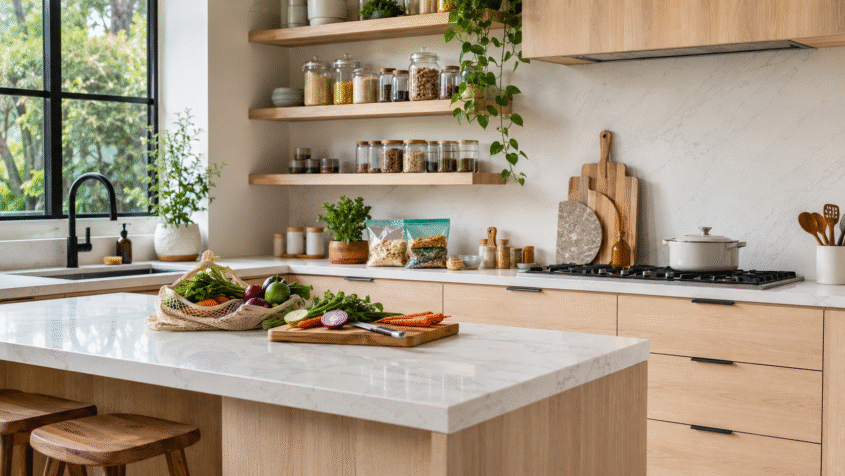
A realistic zero-waste kitchen tour with simple, everyday swaps to reduce waste without chasing perfection or buying unnecessary eco-products.
I used to think a zero-waste kitchen had to look a certain way.
You know the kind of kitchen I mean: open shelves, perfect rows of glass jars, handwritten labels, wooden brushes, beige linen cloths, not a single plastic wrapper in sight. Beautiful, of course. But also a little intimidating, especially when your real kitchen has half a bag of pasta closed with a clip, three mismatched containers, and a drawer full of random takeout napkins you keep “just in case”.
At some point, though, I realized that trying to make my kitchen look zero waste was not the same thing as actually wasting less.
And that changed everything.
For me, a zero-waste kitchen is not about perfection. It’s about using what you already have, buying less disposable stuff, saving things before they become trash, and making a few swaps that genuinely fit into your day. Nothing dramatic. Nothing impossible. Just small changes that slowly become normal.
So, this is not a tour of a perfect eco-kitchen. It’s more like: these are the things I actually use, these are the swaps that stuck, and these are the ones that make sense even if your kitchen is very much a normal kitchen.

The Kitchen Is Usually Where Waste Shows Up First
If you’re trying to live with less waste, the kitchen has a way of exposing everything.
Packaging from groceries. Paper towels. Plastic bags. Food that goes bad because it was pushed to the back of the fridge. Takeout containers. Disposable cutlery. Sauce packets. Napkins. Cling film. Foil. The list is boring, but honestly, it’s also very real.
That’s why the kitchen is often the easiest place to start. Not because it’s simple, necessarily, but because you can see the waste. You notice it every day.
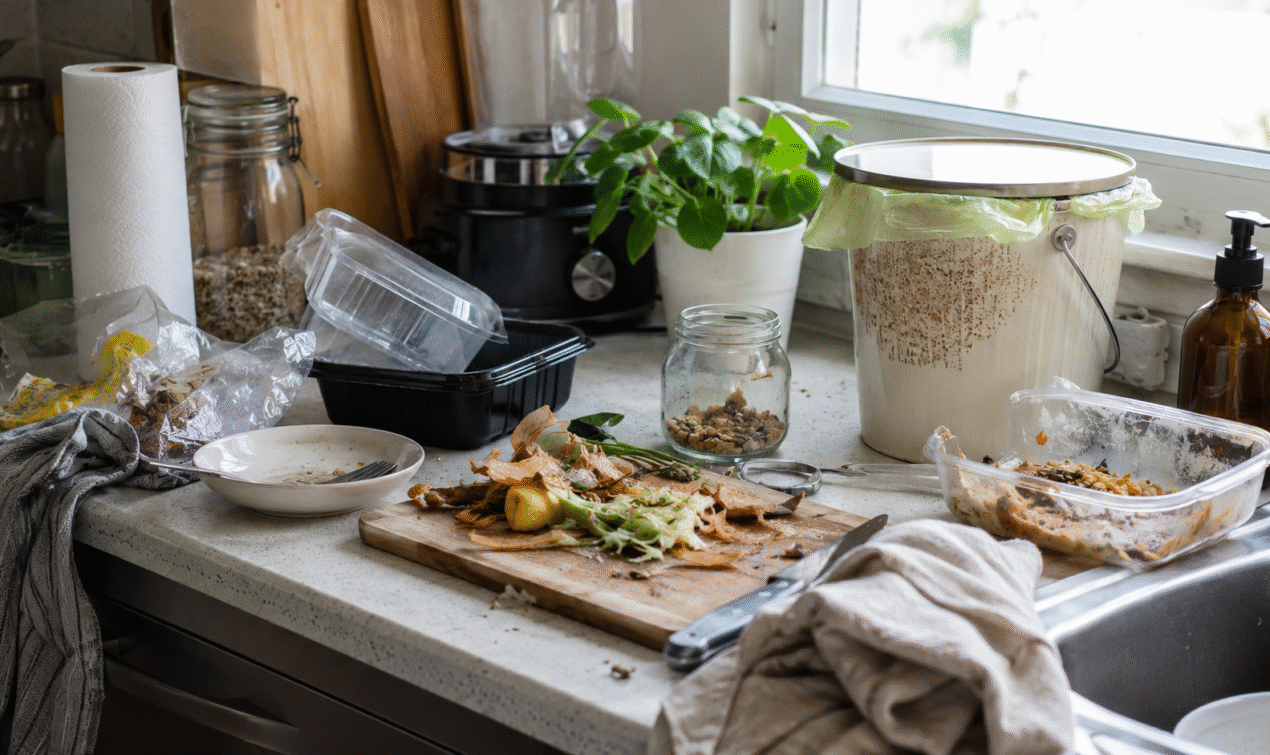
The good news is that you don’t have to change everything at once. Actually, I think that’s where a lot of people get stuck. They imagine a zero-waste kitchen as a full lifestyle makeover, when in reality it can start with something as basic as saving a jar instead of throwing it into recycling.
That counts.
Using the napkins you already have instead of buying more paper towels counts too.
Keeping leftovers visible so you don’t forget them? Also counts.
It’s not glamorous, but it works.
Glass Jars: Useful Before They’re Pretty
Let’s talk about glass jars, because they are probably the first thing people picture when they hear zero-waste kitchen.
And yes, they look nice. I’m not pretending they don’t. A shelf full of jars is satisfying in that very specific “I have my life together” kind of way.
But the real reason I like them is much less aesthetic: they’re practical.
Old jars from jam, pasta sauce, pickles, coconut oil, nut butter — they all become useful if you wash them well and keep the lids. I use them for rice, lentils, oats, seeds, leftovers, homemade sauces, chopped fruit, salad dressings, even tiny amounts of things I would otherwise forget in the fridge.
The important part is this: you don’t need to buy new jars.
Actually, please don’t start your zero waste journey by ordering a perfect matching set of containers. That’s not the point. The jar you already have is better than the beautiful one you don’t need.
Some of mine still have stubborn label marks. Some lids don’t match the vibe at all. One is clearly from an old tomato sauce jar and refuses to pretend otherwise. Fine. It works.
That, to me, is the heart of a real zero-waste kitchen: useful beats perfect.
Reusable Bags: Start With One, Not a Whole Drawer
Reusable silicone bags are one of those swaps I resisted for a while.
Mostly because they’re not exactly cheap, and I didn’t want to buy another “sustainable” thing that would end up abandoned in a drawer. We all have at least one of those, right?
But I started with one. Just one.
I used it for snacks first, then for leftover vegetables, then for freezing fruit, then for carrying something in my bag without creating another layer of plastic waste. Eventually, I added another size because I knew I would actually use it.
That’s the part I would recommend: don’t buy the whole set immediately.
A zero-waste kitchen is not built by panic-shopping eco-products. It’s built by noticing what you reach for every day and replacing the disposable version only when it makes sense.
If you use plastic zip bags all the time, one reusable silicone bag may be genuinely helpful. If you don’t, maybe this isn’t the swap you need right now. There’s no prize for owning every zero waste item on the internet.
Food Storage Is Where Small Changes Matter
Food storage sounds boring, but it’s probably one of the biggest parts of reducing kitchen waste.
Because the problem is not just plastic. It’s also food.
How many times have you put leftovers in the fridge and then found them days later looking suspicious? How often does half a lemon, a bit of rice, or a small portion of sauce disappear behind something else until it’s too late?
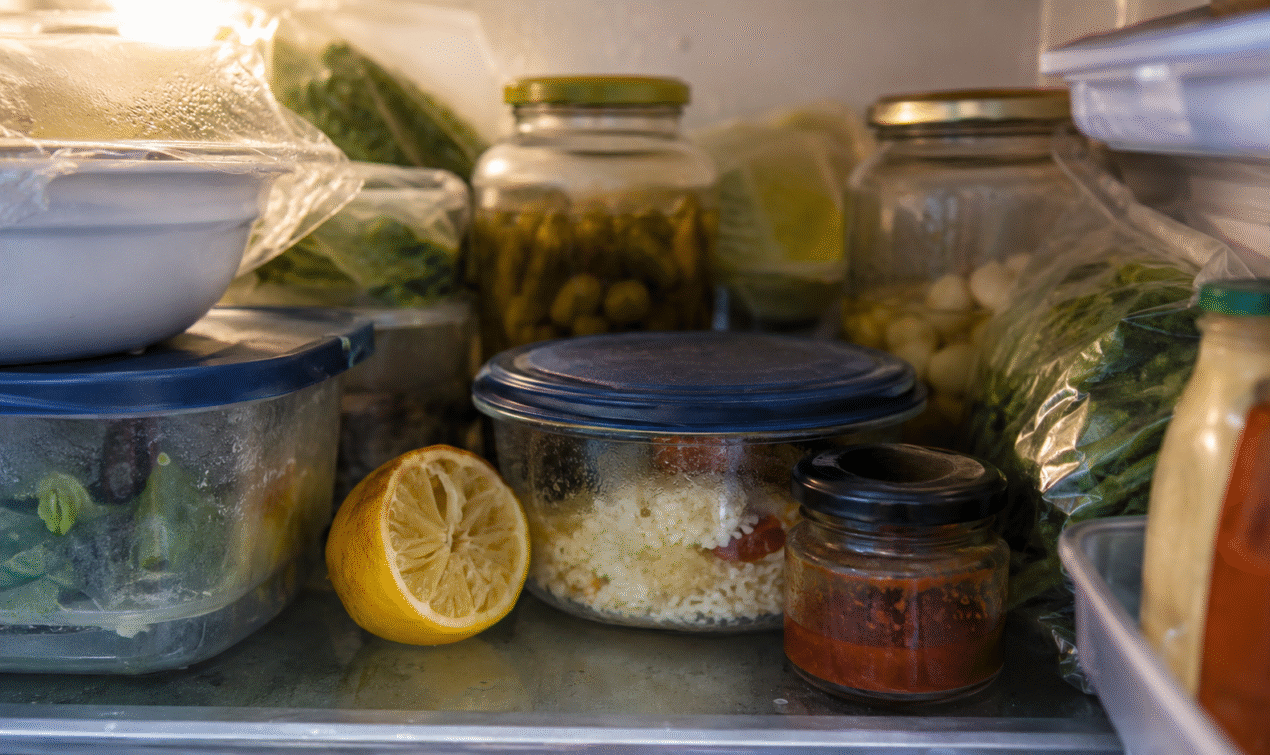

This is where clear jars and reusable containers help a lot. Not because they are trendy, but because you can see what’s inside.
In my kitchen, the things that get used most are:
- reused glass jars;
- a couple of reusable silicone bags;
- random containers that absolutely do not match;
- vegan wax wraps;
- old takeout containers that are still sturdy;
- a few cloths and napkins collected over time.
Nothing revolutionary. Nothing that would go viral on Instagram. But it keeps food visible, covered, and more likely to be eaten.
And honestly, that’s already a win.
The Napkin Drawer Is Not Cute, But It Works
This might be the least aesthetic part of the whole tour, but I stand by it: I have a napkin drawer.
Not a beautiful drawer. Not a carefully organized zero waste station. Just a place where I put extra napkins from coffee shops, takeout bags, bakeries, and random meals out.
For a long time, I used to throw those napkins away because they felt like clutter. Then I realized I was literally throwing them away and later buying paper towels. Make it make sense.
Now I use them first.
To clean small spills. To wrap something quickly. To absorb oil from fried food. To wipe a counter when it’s not worth using a cloth. Is it the most elegant system? No. Does it reduce what I buy and throw away? Yes.
That’s the thing I wish more people said about a zero-waste kitchen: sometimes it looks like a slightly chaotic drawer full of saved napkins.
And that is completely fine.
Silicone Baking Mats and Vegan Wraps
If you bake often, reusable silicone baking mats are worth considering.
I used to go through parchment paper without thinking about it. Cookies, roasted vegetables, bread, anything that might stick — parchment paper was automatic. Then I tried a silicone mat, and it became one of those swaps that just stayed.
No big lifestyle change. No effort. Use it, wash it, put it away.
That’s my favorite kind of zero waste swap: the one you don’t have to emotionally commit to every single time.
Vegan wax wraps are a little more personal. Some people love them, some people find them annoying. I like them for certain things: covering a bowl, wrapping bread, keeping half an apple or a piece of fruit from drying out. I don’t think they replace every use of plastic wrap, but they replace enough to be useful.
And that’s good enough.
A zero-waste kitchen doesn’t need one perfect solution for everything. It needs a bunch of small solutions that cover real situations.
Second-Hand Cookware Deserves More Credit
There’s a weird contradiction in the sustainability world: sometimes it feels like you’re supposed to buy a lot of new things to prove you’re consuming less.
New jars. New utensils. New cookware. New lunch boxes. New “eco” everything.
But if you already have pots and pans that work, keep them.
If your cookware is old but safe, keep using it. If someone gives you a pan they no longer need, take it. If you find a good-quality item second-hand, even better.
Some of the most sustainable things in a kitchen are not labeled sustainable at all. They’re just old, sturdy, and still doing their job.
That’s easy to forget when everything online looks curated.
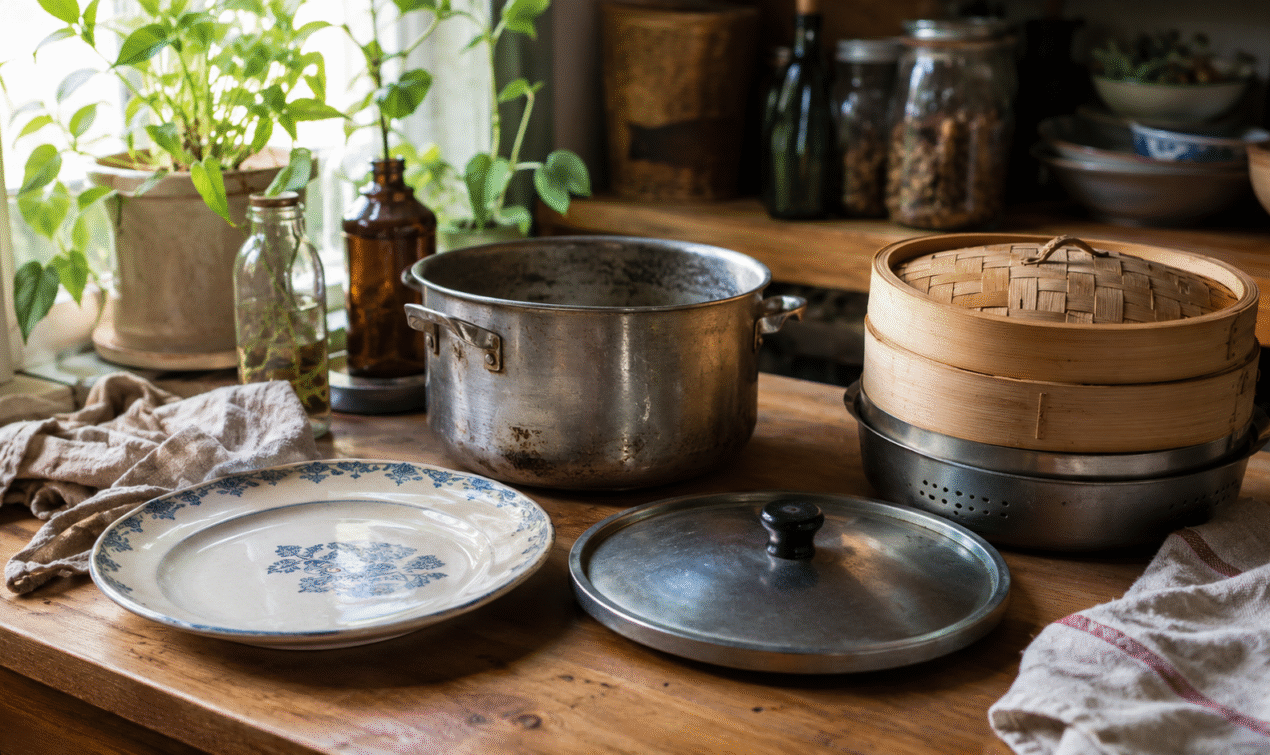
A real zero-waste kitchen can include a scratched old pot from college, a thrifted steamer, a plate from your grandmother, and a lid that fits three different things but matches none of them. Actually, I kind of prefer that.
It feels lived in.
Takeout Waste: Not Ideal, Still Reusable
Let’s be realistic. Sometimes people order takeout.
You can cook from scratch most days and still have a night when you want noodles delivered to your door. Life happens. Work happens. Tiredness happens.
The part I try to focus on is what happens after.
Can I reuse the container? Can I save the napkins? Will I actually use the sauce packets? Are the chopsticks useful for something else? Can the paper bag become a recycling bag?
No, this doesn’t magically make takeout zero waste. But it does keep some things from becoming trash immediately.
And that mindset matters.
A zero-waste kitchen is not a place where waste never enters. It’s a place where you pause before throwing something away and ask, “Can this still be useful?”
Sometimes the answer is no.
Sometimes the answer is yes.
The Things I Wouldn’t Buy Just Because They’re “Zero Waste”
This is where I think we need to be honest.
Not every zero waste product is worth buying. Not for everyone, at least.
There are things that look amazing in a video and make absolutely no sense in your actual routine. Maybe they’re hard to clean. Maybe they take up too much space. Maybe they solve a problem you don’t really have. Maybe they require a level of organization you simply do not possess. No judgment — same.
Before buying anything new for your zero-waste kitchen, I would ask:
Will I use this often?
Do I already own something that does the same job?
Am I buying this because I need it, or because it looks like the “right” eco thing to own?
Will this make my kitchen easier, or just more cluttered?
That last question is important.
Sustainability should not become another form of pressure. You’re not failing because you don’t own every reusable product. You’re not behind because your containers don’t match. You’re not doing it wrong because you still have some plastic in your kitchen.
You’re just living in the real world.
How I’d Start From Scratch
If I had to start again, I wouldn’t begin by shopping.
I’d begin by watching.
For one week, I’d notice what I throw away most often. Not in a dramatic way, not with a spreadsheet, just paying attention.
Is it food packaging? Paper towels? Plastic bags? Leftovers? Coffee cups? Takeout containers?
Then I’d choose one thing.
Only one.
If paper towels are the problem, put cloths or saved napkins somewhere easier to reach. If leftovers are the problem, use clear containers. If plastic bags are the problem, try one reusable bag. If food is going bad, make a “use first” section in the fridge.
This is how a zero-waste kitchen becomes manageable. One annoying habit at a time.
Not overnight. Not perfectly. But in a way that actually lasts.
Final Thoughts
The best zero-waste kitchen is not the prettiest one.
It’s the one you can live with.
It’s the kitchen where jars are reused, leftovers are eaten, napkins get a second life, old pans stay in use, and you buy fewer things because you’re finally paying attention to what you already have.
Some days you’ll do great. Some days you’ll throw something away and think, “Well, that could have gone better.” Normal.
The goal is not to turn your kitchen into a museum of sustainable living. The goal is to make waste a little less automatic.
And once that shift happens, even small things start to feel different.
A jar is not just a jar anymore.
A napkin is not automatically trash.
A container gets one more use.
A leftover becomes tomorrow’s lunch.
That’s not perfection. That’s just a kitchen slowly becoming more thoughtful.