Is a Raw Food Diet Healthy? Foods, Risks and a One-Day Menu

A raw food diet can be healthy when carefully planned, but strict versions may create nutrient gaps and increase the risk of foodborne illness.
A raw food diet is an eating pattern centred on uncooked or minimally processed foods. It usually includes fresh fruit, vegetables, nuts, seeds, sprouts and fermented foods, while some versions also allow a limited amount of cooked food.
So, is a raw food diet healthy? It can be, but only when it provides enough energy, protein and essential nutrients. Eating more whole plant foods can support a balanced diet, but “raw” is not automatically better or safer. The World Health Organization stresses that a healthy diet must be adequate, balanced, varied and safe. Research on strict raw food diets has also identified possible shortfalls in energy, protein, calcium, iodine, zinc and vitamin D, as well as vitamin B12 concerns (PubMed).
In this guide, we look at what counts as raw food, what you can eat, the main benefits and risks, and a practical one-day menu. For a broader look at the philosophy behind raw foodism, see our guide to the crudist lifestyle and the pros and cons of raw food.
What Does “Raw Food” Mean?
A raw food diet focuses on foods eaten uncooked or prepared without conventional high-temperature cooking. Meals are usually based on fresh fruit and vegetables, nuts, seeds, sprouts and fermented foods. Chopping, blending, soaking, sprouting, fermenting and low-temperature dehydrating are commonly used preparation methods.
Most raw food diets are plant-based, although the rules can vary. Some people follow an entirely raw vegan diet, while others include a small proportion of cooked food. Less common versions may contain raw eggs, fish, meat or unpasteurized dairy, which involve additional food-safety risks that we will discuss below.
Supporters often claim that cooking destroys the natural enzymes in food. Heat can reduce certain temperature-sensitive vitamins, but raw does not automatically mean more nutritious. The human digestive system produces the enzymes needed to break down carbohydrates, fats and proteins, as explained by the National Institute of Diabetes and Digestive and Kidney Diseases. Research also shows that the effect of cooking depends on the food, nutrient and preparation method: it may reduce some nutrients while making others easier for the body to access (PubMed).
A raw food diet is also different from a fruitarian diet. Raw food can include a broad range of vegetables, nuts, seeds, sprouts and fermented foods, while fruitarian eating is considerably more restrictive. Our fruitarian diet plan explains this approach in more detail.
Raw Food Diet Food List: What Can You Eat?
Although individual approaches differ, a plant-focused raw food diet usually includes the following food groups:
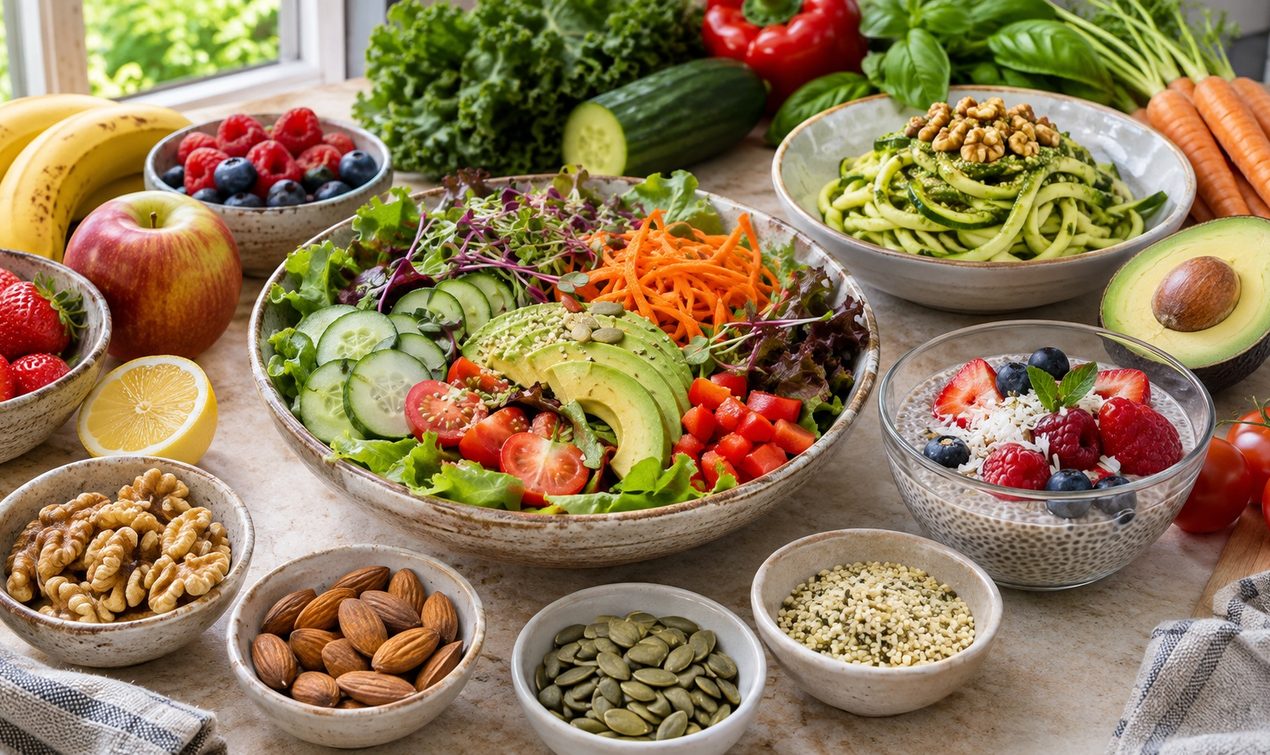
- Fresh fruit: apples, bananas, berries, citrus fruits, grapes, mangoes, melons, peaches and other seasonal fruit.
- Vegetables and leafy greens: lettuce, spinach, kale, cucumber, carrots, tomatoes, peppers, courgettes, cauliflower, broccoli and fresh herbs.
- Nuts and seeds: almonds, walnuts, cashews, chia seeds, flaxseeds, pumpkin seeds, sunflower seeds and sesame seeds. Soaking them may soften their texture, but they must still be stored and handled safely.
- Soaked or sprouted foods: buckwheat groats, quinoa and certain grains or legumes are sometimes soaked or sprouted. However, raw sprouts can carry harmful bacteria, so they require particular caution.
- Fermented plant foods: refrigerated sauerkraut, kimchi and other fermented vegetables may be included when they have been prepared and stored safely.
- Simple plant-based additions: avocado, nut or seed butters made without roasting, cold-pressed oils, lemon juice, herbs and spices can add flavour, energy and variety.
Raw does not mean risk-free. Wash fresh produce under running water, prevent cross-contamination and refrigerate cut ingredients promptly. The FDA’s produce-safety guidance provides practical handling recommendations.
Raw or undercooked meat, fish, shellfish and eggs, as well as unpasteurized milk and dairy products, can expose people to harmful microorganisms. Freshness, appearance and reputable sourcing cannot guarantee that these foods are safe. The FDA advises people at greater risk of foodborne illness to avoid these products, along with raw sprouts and unpasteurized juices. The recipes and sample menu in this guide therefore focus on plant-based options.

Five Easy Raw Food Recipes for Beginners
These easy raw food recipes use simple plant-based ingredients and require no conventional cooking. They can add variety to your meals, although individual recipes should still be combined thoughtfully to provide enough energy, protein and essential nutrients.
If you are moving towards plant-based eating more generally, our beginner’s guide to starting a vegan diet offers additional meal-planning and nutrition tips.
1. Rainbow Vegetable Wraps
Ingredients:
- 4 large lettuce or collard leaves
- ½ red pepper, thinly sliced
- 1 small carrot, grated
- ½ cucumber, sliced
- 1 avocado, sliced
- 2 tablespoons tahini made from unroasted sesame seeds
- 1 tablespoon lemon juice
- A little water
Method: Mix the tahini, lemon juice and enough water to create a smooth dressing. Fill each leaf with the vegetables and avocado, add the dressing and roll tightly.
2. Courgette Noodles with Walnut Pesto
Ingredients:
- 2 courgettes or zucchini
- 1 handful fresh basil
- ⅓ cup walnuts
- 1 tablespoon extra virgin olive oil
- Juice of ½ lemon
- 1 small garlic clove
- A pinch of salt
Method: Spiralize the courgettes into noodles. Blend the remaining ingredients until they form a thick pesto, then toss it through the noodles immediately before serving.
3. Raw Walnut Tacos
Ingredients:
- 1 cup walnuts, soaked in the refrigerator and drained
- 2 sun-dried tomatoes
- ½ teaspoon cumin
- ½ teaspoon paprika
- Lettuce leaves
- Chopped tomato
- Sliced avocado
- Lime juice
Method: Pulse the walnuts, sun-dried tomatoes and spices in a food processor until the mixture has a crumbly texture. Spoon it into lettuce leaves and top with tomato, avocado and lime juice.
4. Chia and Berry Pudding
Ingredients:
- 3 tablespoons chia seeds
- ¾ cup unsweetened plant-based milk
- 1 soft date, finely chopped
- A handful of fresh berries
Method: Mix the chia seeds, plant-based milk and date in a covered container. Refrigerate for at least four hours, stirring once after the first 15 minutes. Add the berries before serving.

5. Raw Cacao and Avocado Mousse
Ingredients:
- 1 ripe avocado
- 1 ripe banana
- 2 tablespoons raw cacao powder
- 1 soft date, if additional sweetness is needed
- A small splash of unsweetened plant-based milk
Method: Blend all the ingredients until smooth and creamy. Refrigerate the mousse and eat it shortly after preparation.
These recipes are flexible, but portions and ingredients should be adjusted according to individual energy and nutritional needs.
One-Day Raw Food Diet Menu
The following one-day raw food diet menu shows how fruit, vegetables, nuts, seeds and healthy fats can be combined across several meals. It is an illustrative example rather than a personalized or nutritionally complete meal plan.
Breakfast
Chia and berry breakfast bowl made with:
- Chia seeds
- Freshly prepared unsweetened almond milk
- Banana
- Blueberries or raspberries
- Hemp seeds
- Chopped walnuts
Mid-Morning Snack
- One piece of fresh fruit
- A small handful of almonds or pumpkin seeds
Lunch
Large raw vegetable bowl containing:
- Mixed leafy greens
- Shredded cabbage and carrot
- Cucumber, tomatoes and red pepper
- Half an avocado
- Hemp and pumpkin seeds
- Tahini, lemon juice and olive oil dressing
Afternoon Snack
- Carrot, cucumber and pepper sticks
- Sunflower-seed dip blended with lemon juice, herbs and a little water
Dinner
Courgette noodles with walnut pesto, served with a cauliflower tabbouleh made from finely chopped cauliflower, tomatoes, cucumber, parsley, lemon juice and olive oil.
Optional Dessert
A small portion of raw cacao and avocado mousse or fresh berries with chopped nuts.
Water should remain the main drink throughout the day. Portion sizes need to reflect the person’s age, activity level, health and overall energy requirements.
This menu is an example, not proof that a strict raw diet will meet every nutritional need. Long-term raw vegan eating can make it more difficult to obtain sufficient energy, protein and certain micronutrients. Anyone planning to follow it regularly should seek guidance from a registered dietitian.
For a broader comparison with a less restrictive plant-based approach, read our guide to the benefits and risks of a vegan lifestyle.
If you would like to compare this with a more fruit-centred approach, our three-day fruitarian diet menu offers practical meal ideas and explains the nutritional limits to consider.
Potential Benefits of a Raw Food Diet
Research specifically examining strict raw food diets remains limited. Their potential benefits appear to come mainly from the foods they emphasize rather than from avoiding cooking itself.
Possible advantages include:
- A higher intake of fruit and vegetables: these foods provide fibre, vitamins, minerals and plant compounds. The World Health Organization includes a wide variety of minimally processed and unprocessed foods among the foundations of a healthy diet.
- Less reliance on highly processed foods: preparing meals from fresh ingredients may reduce the consumption of products high in added sugars, sodium and unhealthy fats. However, this depends on the person’s overall food choices.
- Possible weight loss: raw diets are often rich in fibre and water while being relatively low in calories. This may support weight loss for some people, but it can also lead to unintended weight loss or insufficient energy intake.
- Changes in certain blood lipids: one observational study of long-term raw food eaters found lower total cholesterol and triglyceride levels. However, participants also showed low HDL cholesterol and frequent vitamin B12 deficiency, so these results do not demonstrate that a strict raw diet provides an overall health advantage (PubMed).
There is currently no strong evidence that a completely raw diet is healthier than a balanced diet containing both raw and appropriately cooked foods. Cooking can reduce certain heat-sensitive nutrients, but it may also improve the availability of others, make some foods easier to digest and reduce food-safety risks.
Raw Food Diet Risks and Nutritional Deficiencies
The potential benefits of eating more fresh plant foods do not eliminate the risks of following a highly restrictive diet. The stricter the raw food diet, the more difficult it may become to meet energy and nutritional requirements.
Low Energy and Protein Intake
Raw fruit and vegetables are often filling but relatively low in calories. A person may therefore eat a large volume of food while still consuming too little energy.
A small study of strict raw food eaters found lower average intakes of energy, protein, calcium and iodine compared with vegan and omnivorous participants. Lower zinc and vitamin D levels were also observed (PubMed).
Nuts, seeds and nut butters can increase energy and protein intake, but they may not be enough to compensate for the exclusion of cooked legumes, grains, tofu and other practical protein sources.
Vitamin and Mineral Deficiencies
Nutrients that may require particular attention include:
- Vitamin B12
- Vitamin D
- Calcium
- Iodine
- Zinc
- Iron
- Selenium
- Omega-3 fatty acids
Vitamin B12 deserves special attention because unfortified plant foods are not reliable sources. The National Institutes of Health explains that people who eat little or no animal food may need fortified foods or supplements to obtain enough B12.
A strict raw diet may exclude many fortified products because they have been processed or heated, making careful planning and professional guidance even more important.
Possible Effects on Weight, Bones and Menstrual Health
Evidence in this area remains limited and mainly observational. A small study associated a long-term raw vegetarian diet with lower bone mass, although it could not establish that the diet directly caused the difference (PubMed).
Another study involving long-term raw food eaters found frequent unintended weight loss and underweight. Partial or complete loss of menstrual periods was also reported more often among women following the strictest versions of the diet (PubMed).
Food-Safety Risks
Raw animal products, unpasteurized milk, raw eggs, shellfish, unpasteurized juices and raw sprouts can carry microorganisms that cause foodborne illness. Freshness, appearance or organic certification cannot guarantee that these foods are free from pathogens.
The FDA identifies these foods as particularly risky, especially for pregnant people, young children, older adults and individuals with weakened immune systems.
Who Should Be Particularly Cautious?
A strict raw food diet should not be started without qualified medical or dietetic guidance by:
- Pregnant or breastfeeding people
- Babies, children and teenagers
- Older adults
- People who are underweight or have experienced unintentional weight loss
- People with a current or previous eating disorder
- People with weakened immune systems
- Anyone with kidney, digestive or metabolic conditions
- People with high energy requirements, including some athletes
Eating more raw fruit and vegetables is not the same as following a completely raw diet. A flexible approach that combines raw and appropriately cooked foods is generally easier to make varied, safe and nutritionally adequate.
Frequently Asked Questions About the Raw Food Diet
Is a Raw Food Diet Healthy?
It can include many nutritious foods, but a strict raw diet is not automatically balanced. It must provide sufficient energy, protein, essential fats, vitamins and minerals while following appropriate food-safety practices.
What Can You Eat on a Raw Food Diet?
Common choices include fresh fruit, raw vegetables, nuts, seeds, avocado, cold-pressed oils and safely prepared fermented plant foods. Some people also eat soaked or sprouted foods, although raw sprouts require additional caution because they can carry harmful bacteria.
Is Raw Food Healthier Than Cooked Food?
Not necessarily. Raw preparation preserves certain heat-sensitive nutrients, while cooking can make other nutrients easier to absorb, improve digestibility and destroy harmful microorganisms. A varied diet can contain both raw and appropriately cooked foods.
Can a Raw Food Diet Help You Lose Weight?
A raw food diet is often high in fibre and water while being relatively low in calories, so weight loss may occur. However, rapid or unintended weight loss is a warning sign, and the diet should not be used as a restrictive weight-loss method without professional guidance.
Can You Get Enough Protein on a Raw Food Diet?
Nuts, seeds, hemp seeds and certain sprouted foods provide protein, but meeting individual requirements can be more difficult on a strict raw diet. Cooked legumes, tofu, tempeh and many other practical plant-protein sources are normally excluded.
Does a Raw Food Diet Include Raw Meat or Dairy?
Some non-vegan versions include raw fish, meat, eggs or unpasteurized dairy products, but these foods are not required. They also carry a greater risk of foodborne illness, and freshness or product quality cannot eliminate that risk.
Can You Follow a Raw Food Diet Long Term?
Some people do, but research on long-term strict raw diets remains limited. Studies have identified possible concerns involving energy intake, body weight, vitamin B12 and other nutrients, so regular nutritional assessment and guidance from a registered dietitian are advisable.
Is a Raw Food Diet Healthy? Final Thoughts
A raw food diet can encourage the consumption of fresh fruit, vegetables, nuts, seeds and minimally processed foods. However, a food is not automatically healthier simply because it is raw, and a strict raw diet can create nutritional and food-safety concerns.
For most people, a flexible approach that combines raw and appropriately cooked foods is easier to make varied, safe and nutritionally adequate. Cooking also makes it possible to include legumes, whole grains and other valuable foods that are difficult or unsafe to eat raw.
Anyone considering a long-term strict raw diet should plan it with a registered dietitian, secure reliable sources of essential nutrients such as vitamin B12 and monitor changes in energy, weight and general health. The healthiest approach is not necessarily the strictest one, but the one that safely meets individual nutritional needs.