Juice Therapy: Steve Prussack on Juicing and Purpose
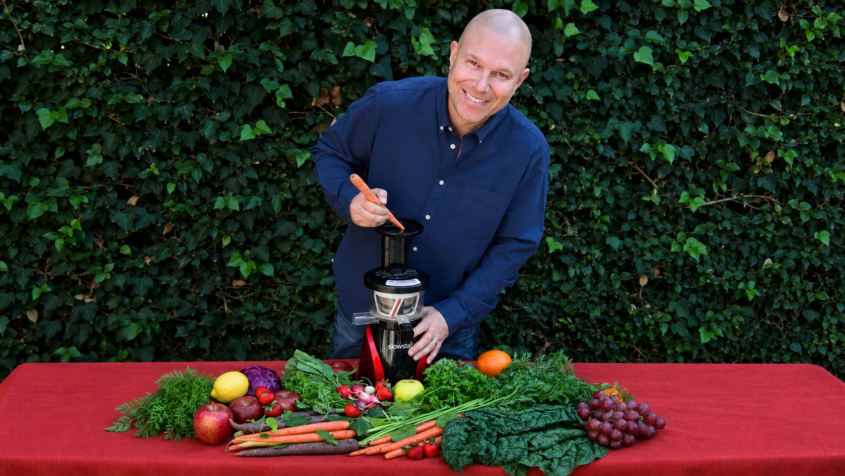
Steve Prussack shares his journey in juice therapy, the power of sustainable habits, and his vision for the future of wellness.
For Steve Prussack, juice therapy began with a simple decision: buying a juicer more than 30 years ago. What started as a personal effort to improve his health eventually grew into a professional mission, leading him to establish the Juice Guru Institute and develop the Juice Guru Method®.
Today, Prussack is an author, educator, and advocate for therapeutic juicing. His work goes beyond encouraging people to drink fresh juice. It also focuses on wellness education, sustainable habits, and helping others build careers around their passion for health.
In this interview, he reflects on his journey, the people who shaped his approach, the lessons he has learned from his students, and his vision for the future of juicing.
His approach to small, sustainable changes also connects with our conversation with nutrition biologist Giulia Napolitano, who explores how to build a healthy relationship with food without rigid rules or unrealistic expectations.
How Steve Prussack Discovered Juice Therapy
To begin, could you introduce yourself to our readers and take us back to the start of your journey? What first led you to juicing more than three decades ago, and when did you realize it could become more than a personal habit?
It’s funny how life works. Sometimes the smallest decisions end up having the biggest impact. For me, that decision was buying a juicer more than 30 years ago.
I didn’t wake up one morning thinking, “I’m going to build an international school dedicated to juice therapy!” I was just a guy in his early twenties who was already concerned about his health.
I was dealing with high cholesterol and beginning to realize something that would eventually shape my entire life: our everyday choices can have a tremendous influence on how we feel and function.
My background is in occupational therapy. As a registered occupational therapist, I was trained to look at the relationship between health, daily activities, and quality of life. But my personal journey with juicing opened my eyes to another dimension of wellness: the remarkable potential of what we put into our bodies every day.
I became fascinated by the nutritional possibilities of fresh vegetable and fruit juices. What started as a personal experiment gradually became a daily ritual, then a passion, and eventually a professional calling.
And here’s something I see with so many of our students, too: the more I learned about juicing, the more I realized I wasn’t just interested in drinking juice. I was interested in helping other people discover what I had discovered.
That curiosity led me to study the pioneers of the juicing movement, connect with leading voices in natural health, write books, develop educational programs, and eventually create the Juice Guru Institute.
Along the way, I discovered something else entirely.
A passion for health can become a passion for helping people. And a passion for helping people can become a business that gives your life a whole new sense of purpose.
Today, after more than three decades in this field, I still find that incredibly exciting.
All of this began with one juicer and a desire to feel better.
You never know what doors a glass of fresh juice might open.
From Jay Kordich to the Juice Guru Method®
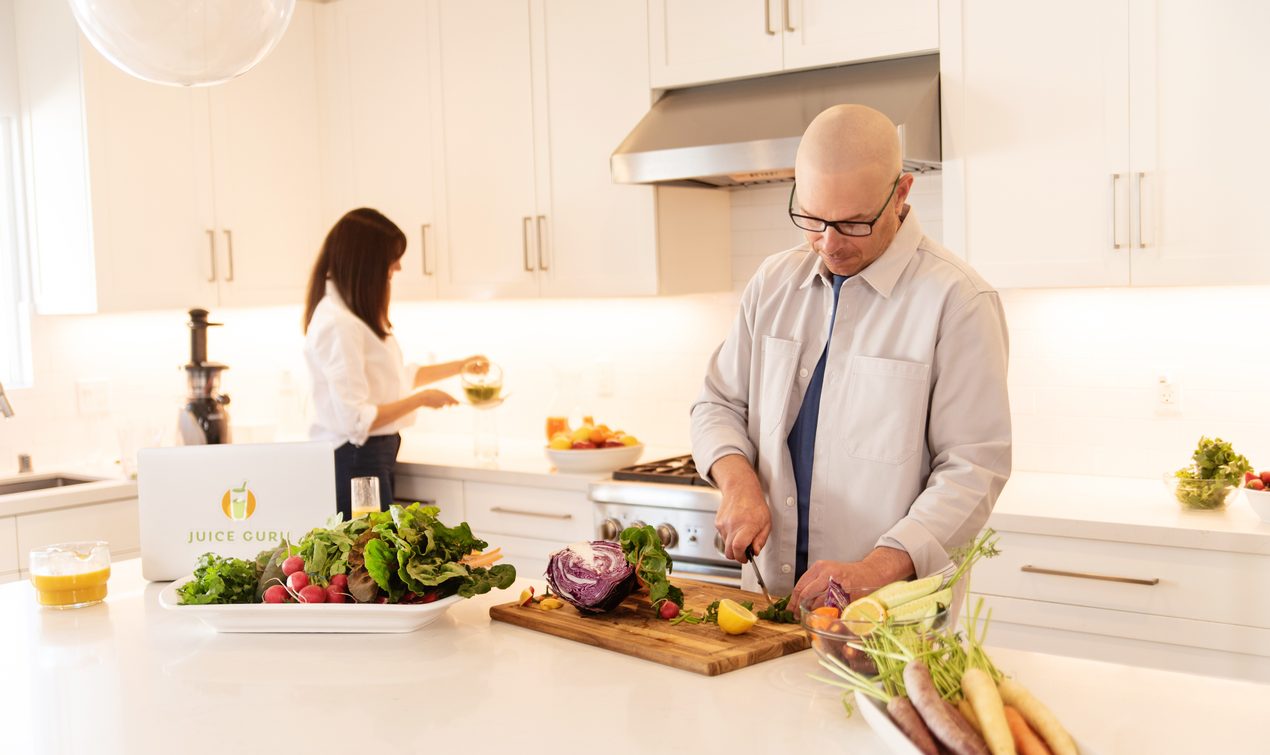
Your early journey included working alongside the original “Juiceman,” Jay Kordich. What did that experience teach you, and how did you eventually move from carrying forward his legacy to developing the Juice Guru Method® and a body of work distinctly your own?
If you remember the original “Juiceman” from ’90s infomercials, then you know Jay Kordich. And what you probably remember most is his passion. Jay wasn’t a trained medical or wellness professional, but he was a walking, talking, enthusiastic celebration of fresh juice.
He had this extraordinary ability to get people excited about something as simple as carrots and apples.
Many years later, in 2011, I had the opportunity to partner with Jay to produce my first online juicing program, called the School of Juicing. That program taught the basic ABCs of juicing for personal health and brought Jay’s work back into the mainstream.
One of the most important lessons I learned from Jay was that knowledge alone doesn’t change lives. You have to make people feel something. You have to inspire them to take action.
And as my own career evolved, I began to see an opportunity to build on the foundation my predecessors had established.
I wanted to take juicing beyond inspiration and develop a structured approach to professional education.
That became the foundation of the Juice Guru Method®.
My vision was to bring together nutritional education, practical therapeutic juicing principles, healthy behavior change, professional communication, and business development into one comprehensive learning experience.
I also wanted to surround our students with a variety of respected voices, including physicians, educators, experienced practitioners, and wellness entrepreneurs.
The goal wasn’t simply to teach people how to make juice.
It was to prepare them to educate others responsibly, create meaningful wellness programs, and build careers and businesses around their knowledge. And to help them launch truly healing juice brands in our communities.
That’s a very different proposition from simply sharing recipes.
Jay helped introduce people to juicing through his passion. I wanted to help people turn that passion into a meaningful profession.
I think he would have appreciated that.
One Juice a Day: Building Healthy Habits That Last
Your bestselling book is centered on the accessible idea of adding one juice a day. Why do you believe a small, consistent habit can be more powerful than an extreme lifestyle reset, and what helps people turn their initial motivation into a sustainable routine?
Because I’ve seen what happens when people try to change absolutely everything on a Monday morning!
They throw out everything in the refrigerator, buy a mountain of kale, announce a completely new lifestyle, and by Thursday, they’re exhausted. And over it.
I’ve always believed there’s a better way.
When we wrote Juice Guru: Transform Your Life by Adding One Juice a Day, the philosophy was intentionally simple.
You don’t have to change your entire life overnight to begin changing its direction.
Start with one juice.
Not ten new rules. Not an impossible schedule. Not a dramatic declaration that you’re never eating anything unhealthy again.
Just one consistent, positive action.
Fresh juice is the most effective and enjoyable way to increase your intake of nutrients from vegetables and fruits, particularly for people who struggle to include enough produce in their everyday diets.
We already knew that.
But even more exciting, as we researched the book, we found a large number of published scientific studies that overwhelmingly supported my philosophy.
These studies showed that adding one daily juice, whether it’s cherry, beet, or kale juice, can actually help the body recover from common conditions such as high blood pressure and high cholesterol, all without the need to change anything else in your diet.
And equally interesting to me was the behavioral side of our research.
Studies also show that when people remove something from their diet, it’s psychologically much harder to maintain that change than it is when they add something new.
And any new change is much easier to maintain if you attach it to a chain of existing habits, like brushing your teeth, showering, and getting dressed.
That small addition to your daily diet can also influence what happens next.
You become more aware of how concentrated doses of nutrients make you feel. And in turn, you become more interested in the foods you eat, more curious about nutrition, and more motivated to establish other supportive habits.
And because the first step is manageable, you’re more likely to repeat it.
In occupational therapy, we understand that sustainable behavior change has to fit into a person’s real life. If a routine is too complicated, expensive, or demanding, it’s unlikely to last.
The same principle applies to juicing.
Make it enjoyable. Make it practical. Choose ingredients you genuinely like. Prepare ahead when possible. And don’t treat one missed day as a personal failure.
I’m not interested in helping people become perfect for seven days.
I’m interested in helping people become healthier for the next 30 years.
Sometimes that journey really does begin with one glass.
Juice Guru Institute and the Global Community of Certified Juice Therapists
Juice Guru Institute has helped more than 5,000 Certified Juice Therapists bring this knowledge into coaching practices, businesses, and communities around the world. What have your students and graduates taught you, and has their work changed or expanded your original vision for the Institute?
This is probably the most rewarding part of everything we’ve built.
When we first developed the Juice Guru Institute, my goal was to create a professional educational experience that would help people understand therapeutic juicing and confidently share that knowledge with others.
What I didn’t fully anticipate was the incredible creativity of our graduates.
We’ve seen people take the same foundational education and build completely different lives and businesses around it.
Some become wellness coaches. Others open juice bars, launch mobile juice businesses, create delivery services, develop community programs, lead workshops, or incorporate juice therapy into an existing health practice to expand their impact.
And some take that knowledge in directions I never would have imagined when we started.
For example, we’ve celebrated graduates like Chef Babette Davis, who has built a tremendous presence in the plant-based wellness world.
We’ve seen entrepreneurs such as Donna Crummer expand her DeeCee Squeez juice brand into multiple LA Fitness locations through on-site juice bar partnerships.
And we’ve watched graduates bring their passion for juicing into corporate wellness education, coaching, and even government wellness programs.
Those stories have reinforced one of the most important lessons I’ve learned:
Your journey doesn’t end with certification. Certification becomes the key that opens new doors of opportunity.
One person might dream of opening a neighborhood juice bar. Another might prefer educating clients online from home. Someone else may want to bring wellness programs into corporate offices or local communities.
There isn’t just one definition of success.
For some graduates, success means building a substantial business. For others, it means having flexible work, making a difference in their community, or finally pursuing something they’ve been passionate about for years.
And I’ve learned that people need more than knowledge to make those dreams happen.
They need confidence. They need practical business skills. They need guidance on positioning, marketing, and finding customers. And they need full support and a community that understands what they’re trying to accomplish.
That’s why our educational approach has continued to evolve beyond traditional certification.
We emphasize not only learning juice therapy but also exploring how to put that education into action.
We want graduates to be able to answer two important questions:
How can I help people?
And:
How can I build something sustainable around the value I provide?
Our graduates have taught me that the real opportunity is much bigger than juicing.
It’s about creating a community of people who can turn knowledge into impact.
We aren’t simply training people to offer juice. We’re empowering them to transform lives through juice therapy.
Responsible Juice Therapy Education and Health Claims
The wellness space can sometimes be filled with quick fixes and sweeping health claims. What does responsible, evidence-informed juice education mean to you, and how does the Institute teach practitioners to communicate the potential role of juicing with clarity and integrity?
If there’s one thing I’ve learned after more than 30 years in wellness, it’s that enthusiasm is wonderful, but enthusiasm is not the same thing as science.
And let’s face it, the wellness world has never been short on enthusiasm.
Every week, there’s another miracle ingredient, revolutionary supplement, secret protocol, or supposedly life-changing health trend. You can get whiplash trying to keep up.
Juicing is different. Its history traces back to the earliest humans, who extracted nectars using a mortar and pestle. And it was brought to this country almost a century ago by pioneers of juice therapy, including Norman Walker.
It has staying power because it’s real. Cold-pressed, fresh juice has been scientifically proven to help prevent disease, as well as help the body heal from many modern lifestyle-related conditions.
But not everyone offers raw juice that heals. Juice companies have been popping up at an alarming and accelerating rate, and most don’t understand the proper way to extract or store juice. Nor do they understand the extremely short shelf life of truly healing raw juice.
Similarly, even those who coach or educate others about juicing often do so in uninformed and potentially harmful ways, including leading months-long juice fasts and recommending that people replace medical care with juice.
That’s why responsible education matters. And it’s the very reason I started the Juice Guru Institute 15 years ago: to bring ethics and standards to the industry.

At Juice Guru Institute, we emphasize understanding the science and practical application of therapeutic juicing, communicating appropriately with clients, and recognizing the importance of professional boundaries and protocols.
We teach protocols, including the Juice Guru Method®, that are both highly effective and responsible. And our educational programs draw on perspectives from physicians, health educators, and experienced practitioners, alongside professional training in behavior change, communication, and business development.
We want our graduates to build businesses based on trust.
I believe the most successful wellness professionals in the long run will be those who communicate clearly, follow safe and effective practices, and genuinely care about the people they serve.
You don’t build a lasting reputation by promising the impossible or guessing your way through.
You build it by being knowledgeable, responsible, and helpful.
My wife, Julie, has a background as an attorney and administrative law judge, and we often find ourselves discussing wellness claims through two different professional lenses.
I’m naturally interested in health education and practical application. Julie brings a healthy skepticism and a desire to protect both our graduates from liability and their clients from harm.
It’s a fascinating combination and a wonderful reminder that asking good questions is just as important as finding answers.
My philosophy is simple: let your passion inspire people, but let your integrity earn their trust.
That’s the kind of professional we want to help develop.
- For readers interested in exploring fresh, uncooked foods beyond juicing, our guide to the pros and cons of a raw food diet examines its nutritional considerations, potential benefits, and limitations.
The Future of Juicing, Wellness, and Entrepreneurship
After more than three decades in this field, what do you believe the next chapter of the juicing movement will look like? If you could invite our readers to rethink one aspect of their relationship with fresh food and everyday wellness, what would it be, and why?
I think we’re entering one of the most interesting chapters in the history of juicing.
When I first started, juicing was largely associated with health enthusiasts and people searching for natural approaches to wellness.
Then came the explosion of juice bars, cold-pressed juices, cleanses, and plant-based lifestyle trends.
Today, I see the potential for something even more meaningful.
I believe the future of juicing will increasingly involve education, personalization, accessibility, and entrepreneurship.
People don’t just want another green juice recipe.
They want to understand how fresh foods can fit into their lives, how to establish sustainable habits, and how to make informed choices without becoming overwhelmed by conflicting wellness advice.
At the same time, I believe there’s tremendous potential for people who are passionate about wellness to create businesses that address those needs.
And those businesses don’t all have to look alike.
You might have an educator helping families establish healthier routines, a coach guiding clients through healing protocols, an entrepreneur bringing freshly prepared juice into corporate wellness programs, or a wellness professional integrating juice education into an established practice they want to grow.
Technology is also opening up opportunities for entrepreneurs to teach, coach, connect with clients, and build communities in ways that weren’t available when I started.
But beneath all the technology and business innovation, I think the most important principle remains incredibly simple.
We need to reconnect people with people. And reconnect people with real food.
We live in a world where it’s possible to spend hours debating the latest supplement or weight-loss injection while barely giving a thought to the vegetables sitting in our refrigerator.
And we’ve invited AI, a cold, nonhuman presence, to sometimes stand in for the truly educated, human guidance we all need and crave.
Sometimes we’ve made wellness so complicated that we’ve forgotten the fundamentals.
So here’s what I would invite your readers to consider:
What if, instead of asking what you need to eliminate from your life, you started asking what wonderful things you could add?
More fresh produce. More color. More curiosity about what nourishes you. More enjoyment in the process of caring for yourself.
And perhaps, for some people, more purpose.
Because I’ve also seen something beautiful happen over the years.
Someone starts juicing because they want to feel better.
They become fascinated by what they’re learning. They start to look better and younger than their peers. They find that they no longer need to take a cacophony of pills to stay healthy.
Friends and family begin asking questions.
They discover they love sharing that knowledge.
And one day, they realize that what began as a personal wellness habit might actually become a new career or business.
That’s an extraordinary transformation.
It’s also the reason I continue to be so passionate about the work we do at Juice Guru Institute.
We’ve helped introduce thousands of people to a professional path in juice therapy, and I believe we’re only beginning to explore what’s possible.
If someone reading this has a genuine passion for juicing, nutrition, and helping others, I’d encourage them to explore where that passion could lead.
You don’t have to know exactly what your future business will look like today.
You simply have to be curious enough to investigate the possibilities.
More than 30 years ago, I started with a glass of juice. Today, my greatest joy is helping other people discover what might be waiting on the other side of theirs.
And I still think that’s pretty amazing.
Thank You, Steve!
We would like to sincerely thank Steve Prussack for taking the time to share his journey, experiences, and insights with LifestyleMind.
To learn more about his work, explore the Juice Guru Method®, and follow his latest projects, we invite our readers to connect with Steve on his social media channels and visit the Juice Guru Institute website.
About Steve Prussack
Steve Prussack, MS, OTR/L, is the founder of Juice Guru Institute, creator of the Juice Guru Method®, and bestselling author of Juice Guru: Transform Your Life by Adding One Juice a Day and The Complete Idiot’s Guide to Juice Fasting.
Through Juice Guru Institute, Steve and his team have helped thousands of students develop their knowledge of therapeutic juicing and explore professional opportunities in wellness education, coaching, and entrepreneurship.
The Institute offers professional Certified Juice Therapist® training, practical business education, and resources for people interested in building meaningful work around their passion for wellness.
Learn more at Juice Guru Institute.
Editorial Note