Seed Sovereignty, Biodiversity, and the Future of Food Systems: An Interview with Navdanya International
There’s a quiet revolution happening beneath our feet — in the soil, in the seeds, and in the hands of those who still choose to grow food in harmony with nature.
At a time when industrial agriculture dominates the global narrative, promising efficiency while often leaving behind depleted soils, fragile ecosystems, and disconnected communities, an alternative vision is taking root — one grounded in biodiversity, regeneration, and seed sovereignty.
At the forefront of this movement is Ruchi Shroff, Director of Navdanya International, an organization committed to reimagining the future of food through ecological stewardship, social justice, and the protection of biodiversity.
In this interview, Ruchi Shroff shares her perspective on the urgent need to reclaim seeds, restore ecosystems, and transform the way we produce and consume food. She reflects on the challenges facing today’s global food systems and the deeper cultural shift required to build a more resilient and harmonious relationship with the Earth.
Because the future of our planet may not depend on producing more — but on remembering how to care.
Why Seed Sovereignty Is Key to the Future of Food Systems
1. To begin, could you introduce Navdanya International to our readers? How did the organization come to life, and what vision continues to guide your work today?
Navdanya International was founded in Italy in 2011 to strengthen and expand Navdanya’s global outreach in its mission to protect nature, Earth’s biodiversity, people’s rights to seeds and food, and farmers’ rights to save, exchange, and evolve seeds.

Building on Navdanya’s long-standing experience in defending biodiversity and supporting small farmers in India, Navdanya International was created to bring these struggles and perspectives into international debates, policies, and citizen-led processes.
Today, our work is guided by the vision of a world in which we think, live, and act as members of one Earth Family, interconnected through the web of life—where biodiversity, soil, and water are regenerated, and where small farms can produce diverse and healthy food as a way to restore both the planet and communities.
We aim to catalyze a real ecological transformation, moving away from an industrial, extractive paradigm based on separation, toward an ecological paradigm rooted in interconnected, biodiverse, local agroecological and regenerative economies and cultures that work in harmony with nature.
2. The protection of biodiversity and seed sovereignty lies at the heart of your mission. Why are these issues so crucial for the future of our food systems?
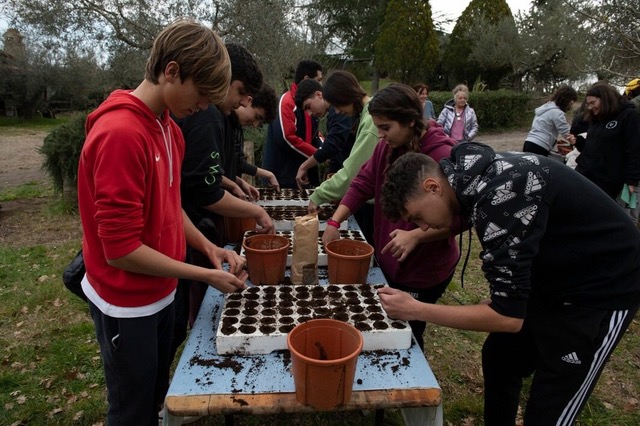
Biodiversity and seed sovereignty are crucial because they form the living foundation of our food systems, our cultures, and our ability to respond to crises. When farmers can save, exchange, and evolve diverse, open-pollinated seeds, they preserve the genetic richness needed to adapt to climate change, regenerate soils, and provide nourishing, culturally appropriate food.
Seed sovereignty means reclaiming seeds and biodiversity as commons and public goods, rather than commodities controlled by a handful of corporations. This is essential if we want local communities to remain resilient and free to shape their own food systems.
From our perspective, protecting biodiversity and seed freedom is not only about conservation; it is an active way to shift from an extractive model to an ecological paradigm where life—not profit—is at the center.

From Biodiversity to Seed Sovereignty: Rethinking Agriculture
3. Navdanya International often highlights the connection between agriculture, ecology, and social justice. How are these elements linked in your perspective?
For Navdanya International, agriculture, ecology, and social justice are deeply intertwined aspects of the same reality. The dominant industrial agriculture model is based on extraction: extracting fertility from the soil, water from ecosystems, and value from farmers and workers. This separation between humans and the rest of nature inevitably leads to ecological collapse and social inequality.
Agroecological and regenerative food systems, by contrast, are built on relationships—between crops and biodiversity, between soil and water cycles, and between communities and their territories—creating conditions in which both ecosystems and people can thrive.
In this sense, transitioning to an ecological paradigm is not only an environmental necessity; it is also a matter of justice, dignity, and democracy, especially for small-scale producers, Indigenous peoples, women, and young people.
4. Through your projects and collaborations, you work with farmers and communities in different parts of the world. What have you learned from the people who are practicing regenerative or traditional farming methods?
From farmers and communities practicing regenerative or traditional methods, we continuously learn that agriculture is, first and foremost, a relationship of care with the land. They show us that soil is alive, and that diversity in the field—of seeds, crops, and farming practices—is what enables agroecosystems to remain resilient in the face of climate shocks and market volatility.
Their knowledge, built over generations, demonstrates that it is possible to feed communities with diverse, healthy food while regenerating biodiversity, water, and soil rather than depleting them.
We also see how small farms, when rooted in local cultures and supported by fair relationships, can become powerful centers of ecological and social regeneration, strengthening both territories and community life.
5. Today many people feel disconnected from the origins of their food. In your opinion, what is the first step individuals can take to rebuild a more conscious relationship with what they eat?
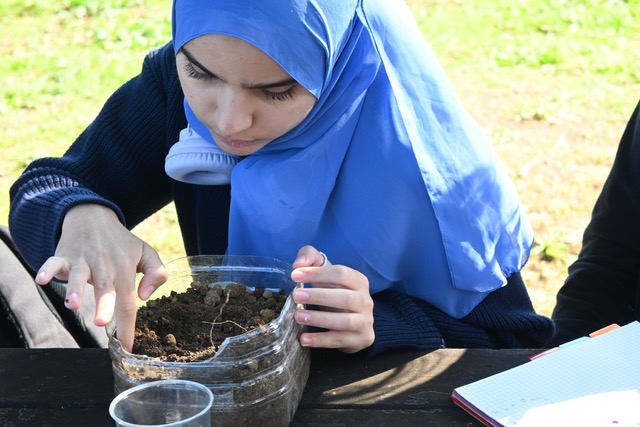
The first step is to slow down and ask very simple questions: Where does my food come from? Who produced it? How was it grown?
This act of inquiry already begins to rebuild the connection between what we eat and the web of life—soil, water, seeds, farmers, and local landscapes—and can open the way to choosing seasonal, local, and agroecological food.
Supporting small farmers through farmers’ markets, community-supported agriculture, food co-ops, and local food initiatives turns eating into a daily act of solidarity and regeneration, rather than a passive consumption of anonymous products.
In this way, each person can participate in the shift from an industrial, extractive paradigm toward local, regenerative economies and cultures that work in harmony with nature—starting from their own plate.
Agroecology, Regenerative Farming, and Seed Sovereignty
6. Industrial agriculture often dominates the public conversation about food production. What are some of the biggest misconceptions people have about agroecology and regenerative farming?
One of the biggest misconceptions is that agroecology and regenerative farming are “less productive” or “less realistic” than industrial agriculture. When we look beyond short-term yield and consider nutrition, soil fertility, biodiversity, water, resilience, and farmers’ livelihoods, diversified agroecological systems often perform better—especially under climate stress.
Another misconception is that these approaches are marginal or nostalgic, when in fact they are grounded in science and living knowledge, and are increasingly recognized as essential to achieving real food and nutrition security.
People also tend to view regenerative agriculture as merely a set of technical practices, whereas we understand it as a holistic way of organizing food systems so that they work with ecological processes, strengthen local communities, and reduce dependence on external inputs and corporate control.
7. Looking ahead, what gives you hope when you think about the possibility of transforming global food systems into something more sustainable and equitable?
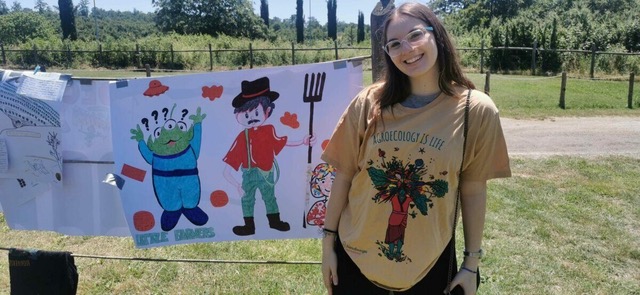
Hope comes from what we already see happening on the ground: communities regenerating soils and landscapes, farmers safeguarding seeds, young people discovering agroecology, and local food systems being rebuilt from the bottom up.
Through programs such as Terrae Vivae, Ecoculturae, and other community-based projects, we see that citizens, producers, schools, and local institutions can co-create living examples of the ecological paradigm we are working toward.
It is encouraging to witness how local experiences—from defending native seeds to building urban and peri-urban food councils—can connect to global spaces and help reshape the conversation on climate, biodiversity, and food systems.
What also sustains our hope is a particular way of engaging with these challenges: focusing on doing our part, step by step, and strengthening our collective capacities, rather than being paralyzed by the magnitude of what we are up against.
We know we are not starting from zero; countless people around the world are already acting as members of one Earth Family, interconnected through the web of life. By weaving these initiatives together, we can help bring about the deep transformation our times require.
We would like to sincerely thank Ruchi Shroff for taking the time to share their vision, knowledge, and ongoing work with us. Their commitment to protecting biodiversity, supporting farmers, and reimagining our food systems offers a powerful perspective on the challenges and opportunities of our time.
If you’d like to learn more about their projects and stay connected with their initiatives, we invite you to follow Navdanya International on their official channels:
🌐 Website: https://navdanyainternational.org/it/
📸 Instagram: https://www.instagram.com/navdanyainternational/
🎥 YouTube: https://www.youtube.com/@navdanyainternational
📘 Facebook: https://www.facebook.com/navdanyainternational/